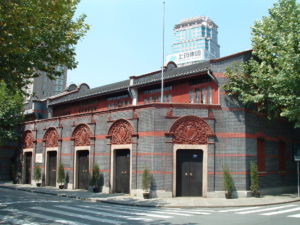
97 years ago today, the Communist Party of China held its first congress in Shanghai, to unify its branches across the country and plot its course through history. It was in fact a Dutchman, Henk Sneevliet, who had urged the Communist to gather for a national meeting. Sneevliet, also known as ‘Maring’, was a seasoned socialist with political experience in the Netherlands and the Dutch East Indies, and was sent to China from Moscow by Vladimir Lenin himself. For more than three hours, Sneevliet adviced Mao on how to influence crowds.
And 28 years after the event, in 1949, the Party and Mao claimed power over China. Only two of the attendants of its first meeting where at the ceremony, as all others had either fallen to Mao’s wrath, or became casualties of war. Sadly, Sneevliet himself had become one too, when he was executed as a resistance fighter in a Nazi-occupied Netherlands, in 1942.
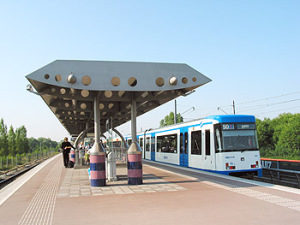
Sneevliet, despite being instrumental in setting up the biggest and most powerful political organisation in the world, is largely unknown in the Netherlands — although he has an Amsterdam metro station named after him. The station is looks anonymous, just like the others on the line — a sad elevated platform with blue-and-pink bricks and entrances gates north and south. I lived next to it for over two years and never cared to find out where it got its name from. In the months when Leila and me were getting to know each other, we said our goodbyes here — before we had any idea about living our lives together in Shanghai. It’s funny then, that I found out about ‘Marin’s’ legacy in China, after living next to it. So I’m writing this because often people try to make sense of history through connecting dots. And they do so because it sheds light on the past as well as the future. It instructs and educates. But sometimes, connecting the dots just provides a nice coincidence.