When this summer, we moved back to the Netherlands, I felt — mourned almost — that my Mandarin would be wasted, after spending over 900 class hours learning it. In Shanghai, I used it every day, the whole day. At work, in shops, while traveling, at home. But it’d serve no practical use in Hattem, a small town, 90 minutes away from Amsterdam. Eva would be learning Dutch so even at home we better avoid speaking Chinese. Instead, the language belonged to the city and life I had left behind.
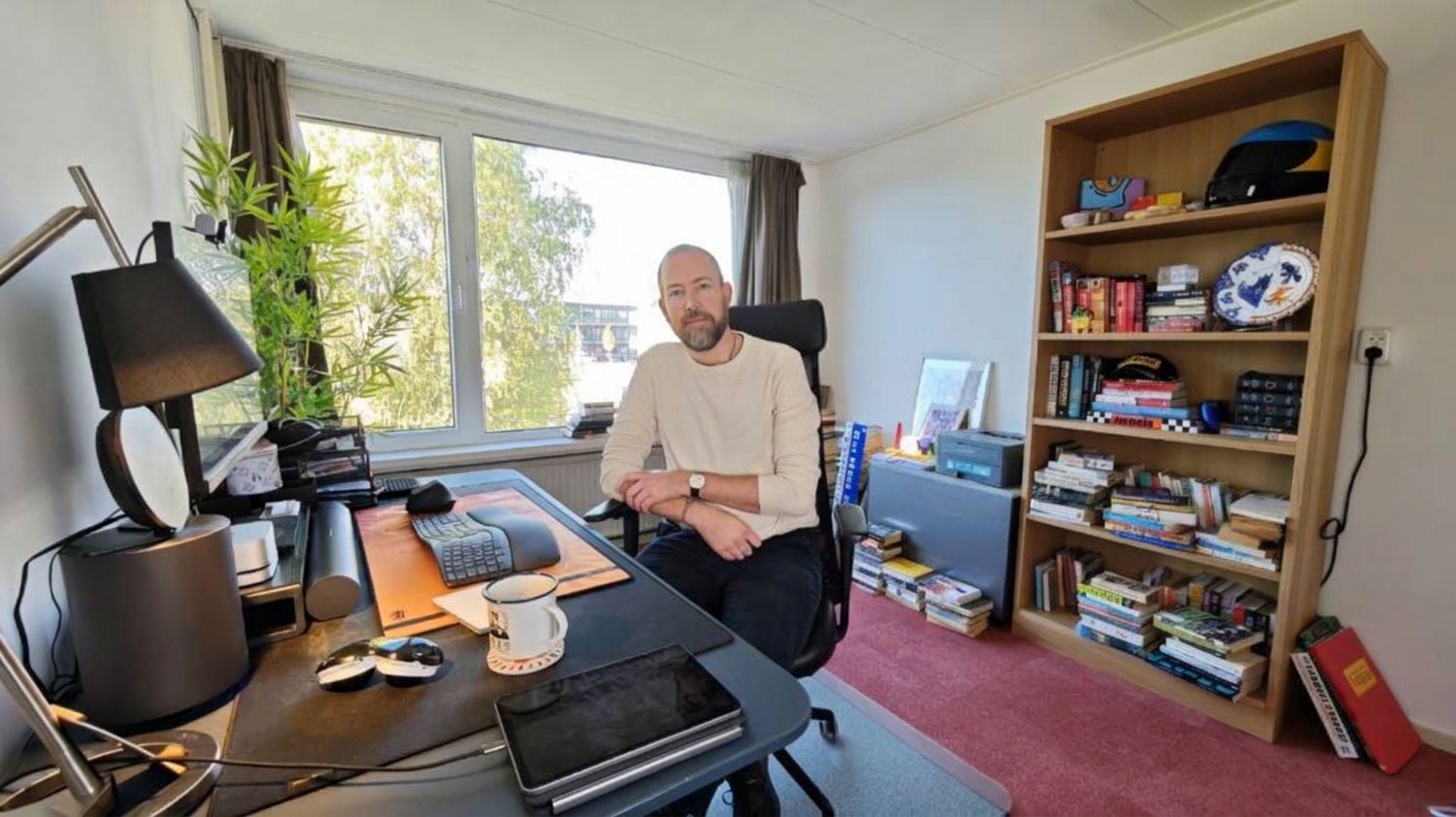
And yet there are plenty of things on my working desk that remind me of this previous life: a coaster from Xi’an, a small banner that reads 四时风雅 (the elegance of the four seasons), and the most obvious one; my monitor that is filled with work-related projects. It wasn’t that obvious to me before, but I’m still working from home as a consultant for Chinese tech companies, helping them to do overseas marketing — and so I’m still using Mandarin for the biggest part of the day.
—
When I started learning Mandarin in 2018, my classmates and I already discussed whether translation apps would make learning Mandarin useless. And if your work consists of checking emails or documents, maybe it does. But working inside a Chinese company is so much more than that. Joining meetings and voice calls is how you learn the internal language: how things work, the politics, how to write a proposal you want approved and make it land, and how to make the proposals you disagree with quietly disappear. People speak fast, interrupt each other, make a joke, switch topics, and the decision is made somewhere in between — or quietly after the meeting.
A translation app puts a huge pane of translucent glass between you and every word. You can see the shapes moving and follow what’s said, but that’s not real participation. If you insist the meeting is held in English, the key stakeholders simply won’t be in it. And to understand a company as a whole, you need to talk to everyone: customer care, the product team, the sales team, the engineers, the big boss. Each of them sees a different part of the company, and most of them will tell you about it in Mandarin. (That’s also why, in my guide on how to get a job in China, I recommend at least HSK 5.)
I’m sure my Mandarin has its gaps, and I’ll never sound like a native speaker. It’s good enough to argue a point, to understand what’s being decided, and to push back when I need to. And at that level, it no longer matters where you live. I wrote about the road to that level, from my first characters in 2018 to two years of pronunciation classes, in My Chinese learning journey.
It shows up outside of work too. I still scroll Xiaohongshu, and I follow Chinese-speaking communities on Reddit and Discord. They talk about the same things I follow in English, from another angle, and often a few days earlier.
And then there are the trade shows. Chinese companies are everywhere now: at CES in Las Vegas, at the Sim Racing Expo in Germany, at the flight sim expos, and at IAAPA in Orlando, where I’m writing this. In one industry after another, Chinese companies have moved in, often faster and cheaper, and the established names have to scramble to keep up. At both shows I went to this year, a large share of the booths were Chinese.
In Orlando I needed a television for about half an hour, so I walked over to one of the Chinese booths and asked in Mandarin if I could borrow one. “哇,你会说中文!” (Wow, you speak Chinese!) Sure, take it, just bring it back. Later that day I needed a vacuum cleaner, and another booth lent me theirs on the same terms. I doubt either would have happened in English. Speaking someone’s language at a trade show, far from both our homes, turns a stranger asking for something into a favour between two people who suddenly have something in common. People were friendly, curious, and happy to help.
So the language I thought I’d lose by moving back has become one of the most useful things I brought with me. It gets me into meetings, into communities, and apparently into other people’s booth equipment.