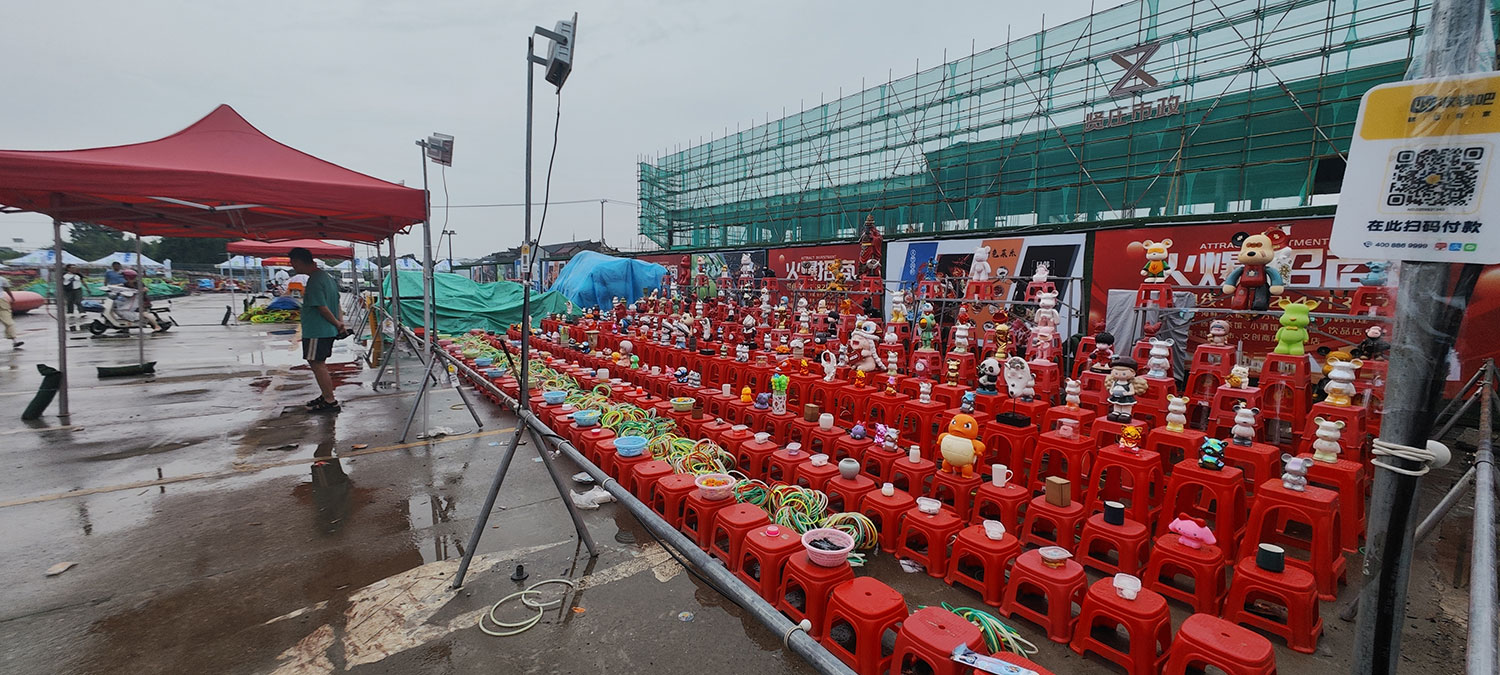
We’re in Zhuanghang (庄行) for its 伏羊Fúyáng Festival.
I don’t know whether the 羊 here stands for sheep or goat (the Chinese word does not distinguish between the two), so I ask the chef. “No idea”, he says and yells for the owner.
I even show him a picture of both a sheep and a goat, but the owner goes “No no no”, and shakes his head: “It’s 白山羊 (White goat).”
So ok, yes — it’s goat. He tells me they’re from Haimen (海门) in Jiangsu, his hometown, and adds: “Because we’re not allowed to butcher goat in Shanghai, they’re butchered there and then brought here for cooking.”
He proudly adds that he started the business with 2.000 RMB, and now even Chinese and even Japanese television have come here, and that with his four restaurants together, on the busiest day of the year, he can make 40万 (400.000 RMB) in one day.
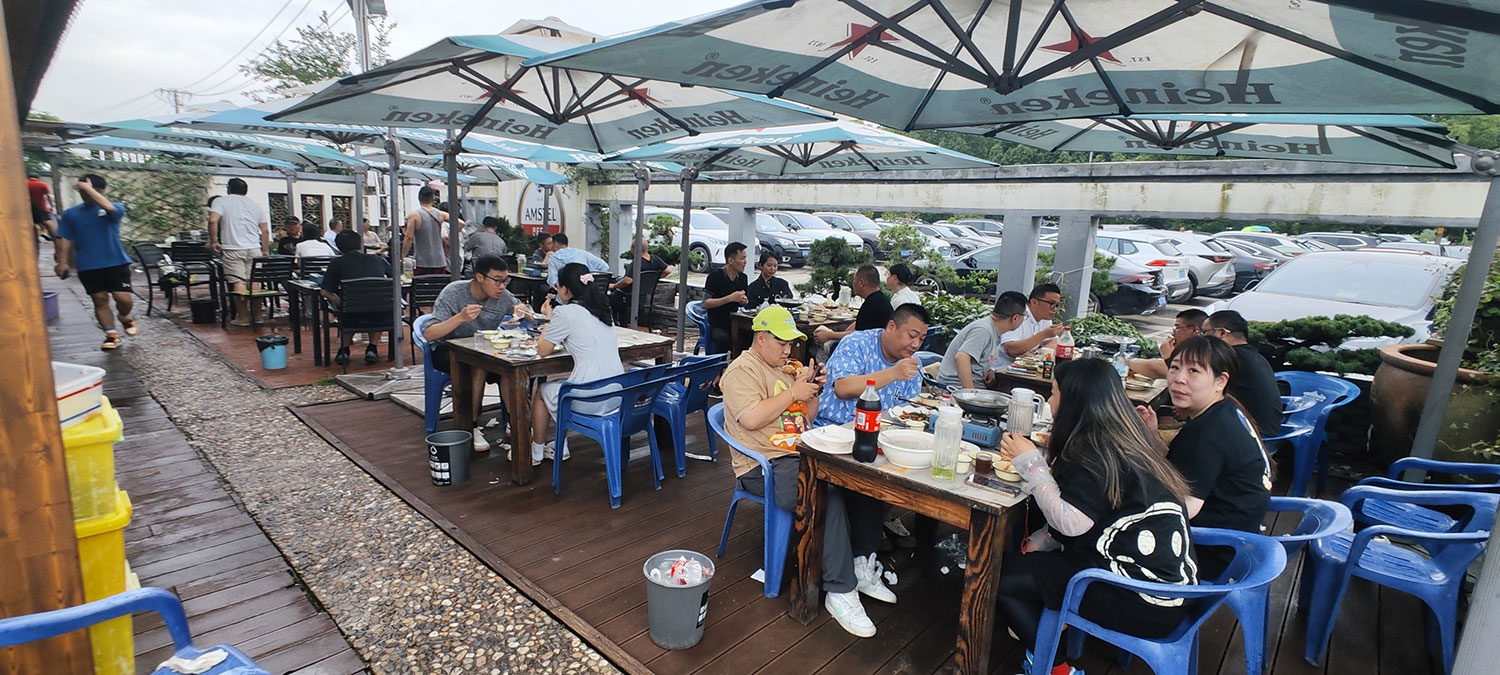
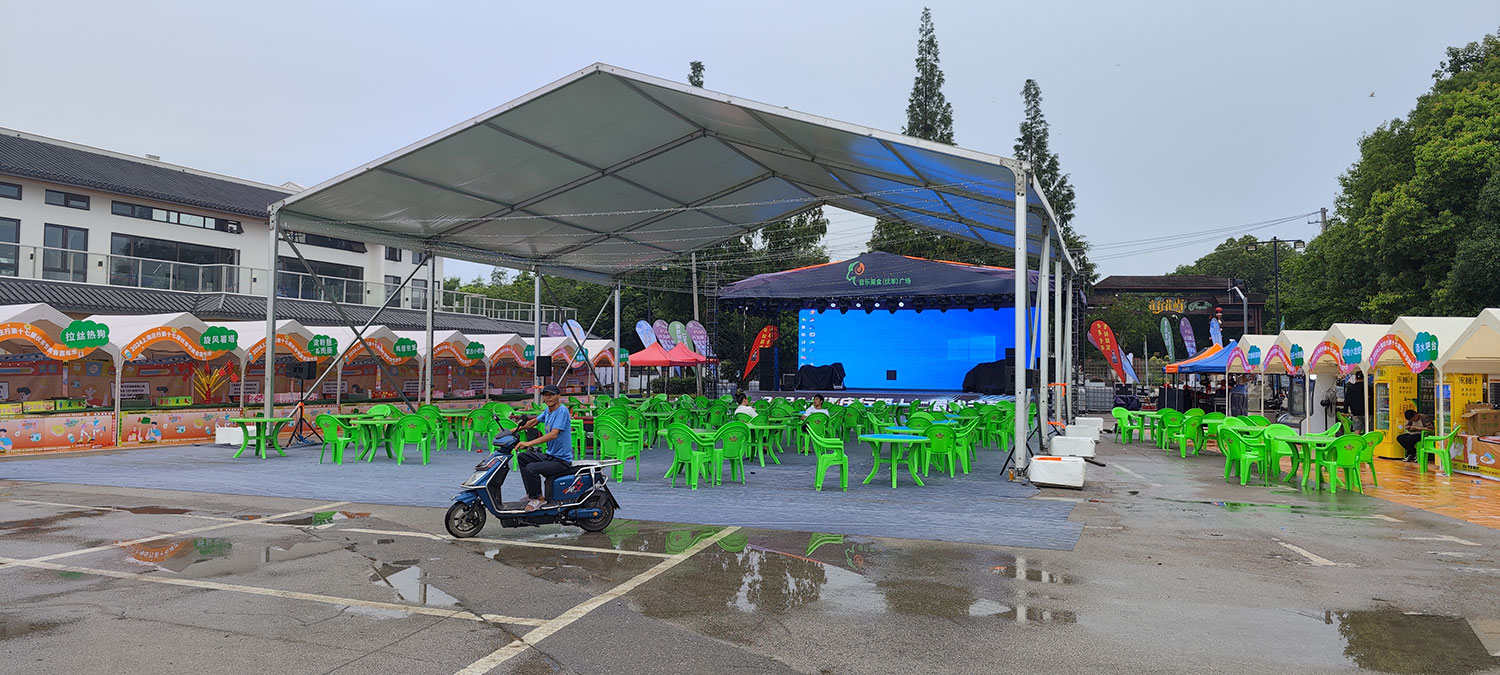
His restaurant is the only one doing well, with people queueing to get a table, while the rest of the festival terrain is rather empty. But maybe in the evening this whole place comes alive.
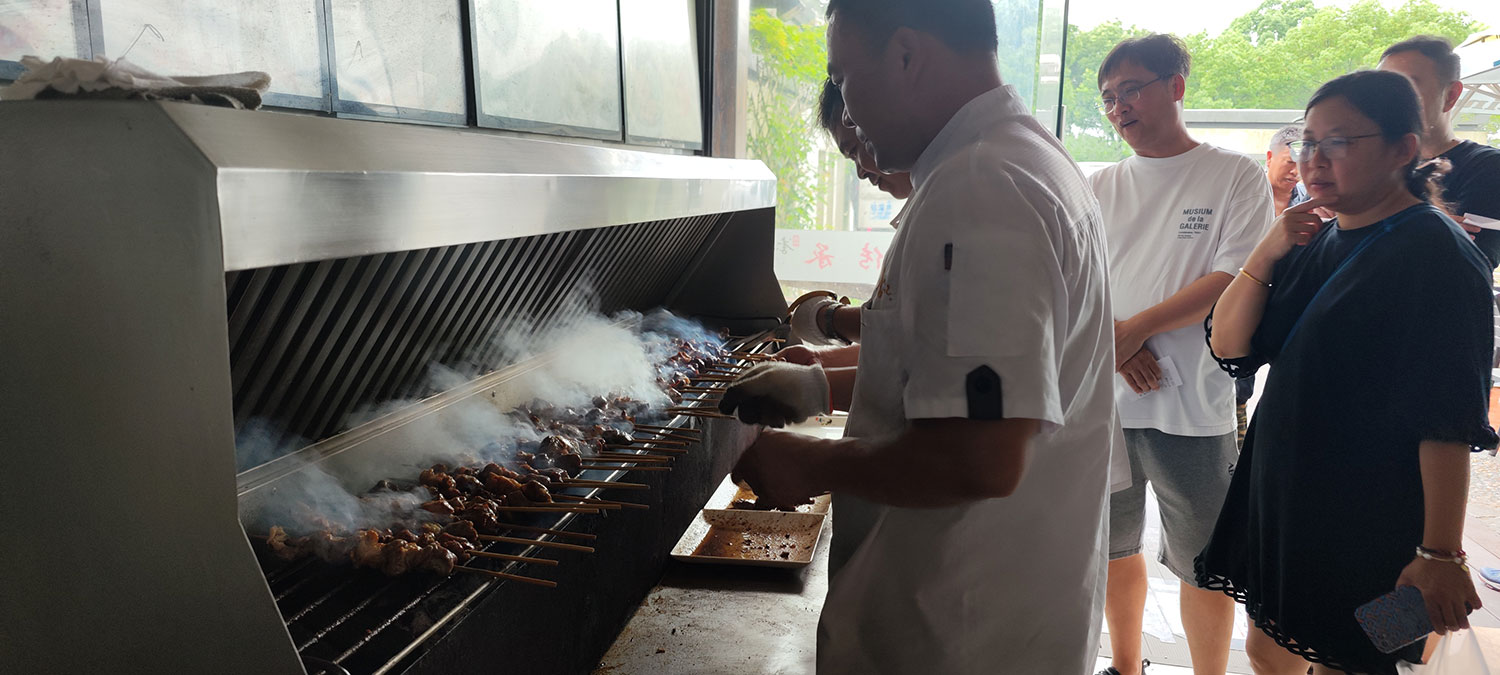
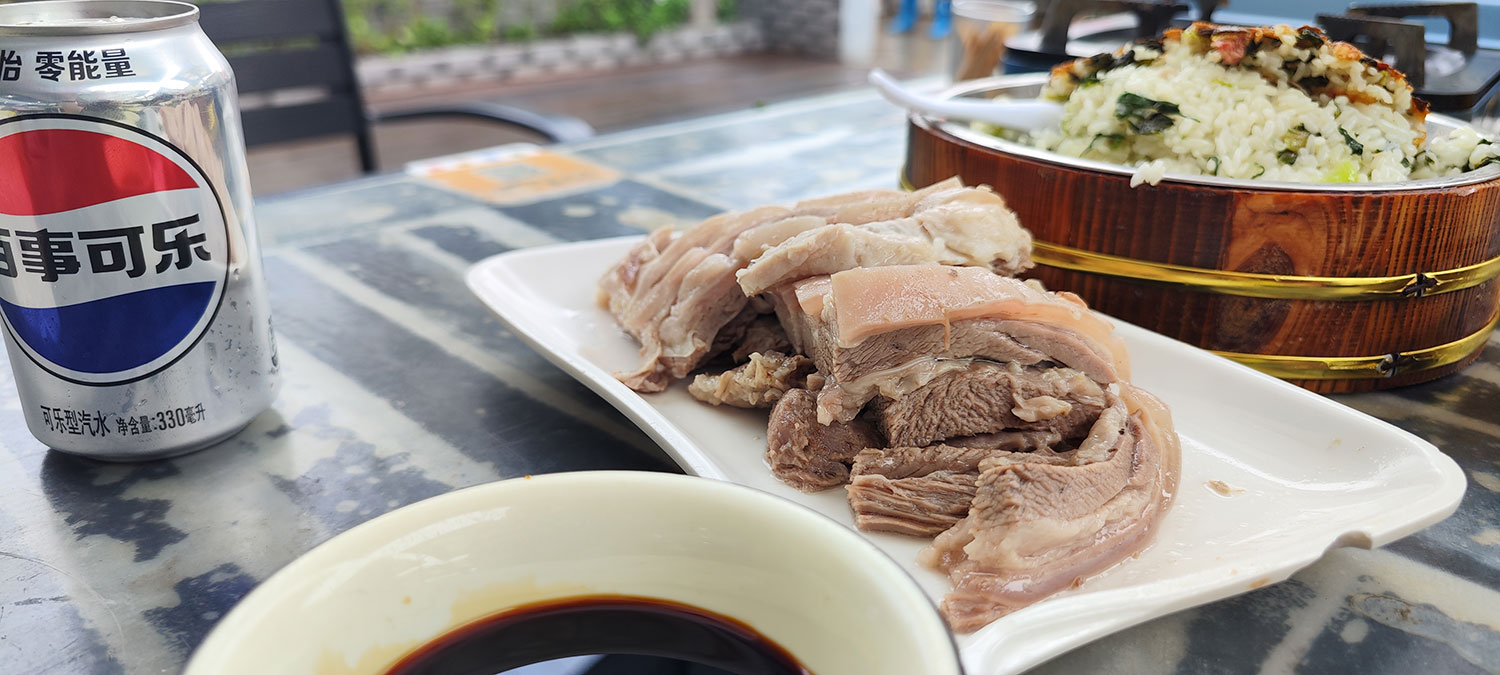
But I can see why. We chose the authentic recipe — centuries old, apparently, rather than the barbeque — but it’s 10/10. It’s a piece of goat on a plate, literally. Skin, fat, and several different layers of meat, all still together.
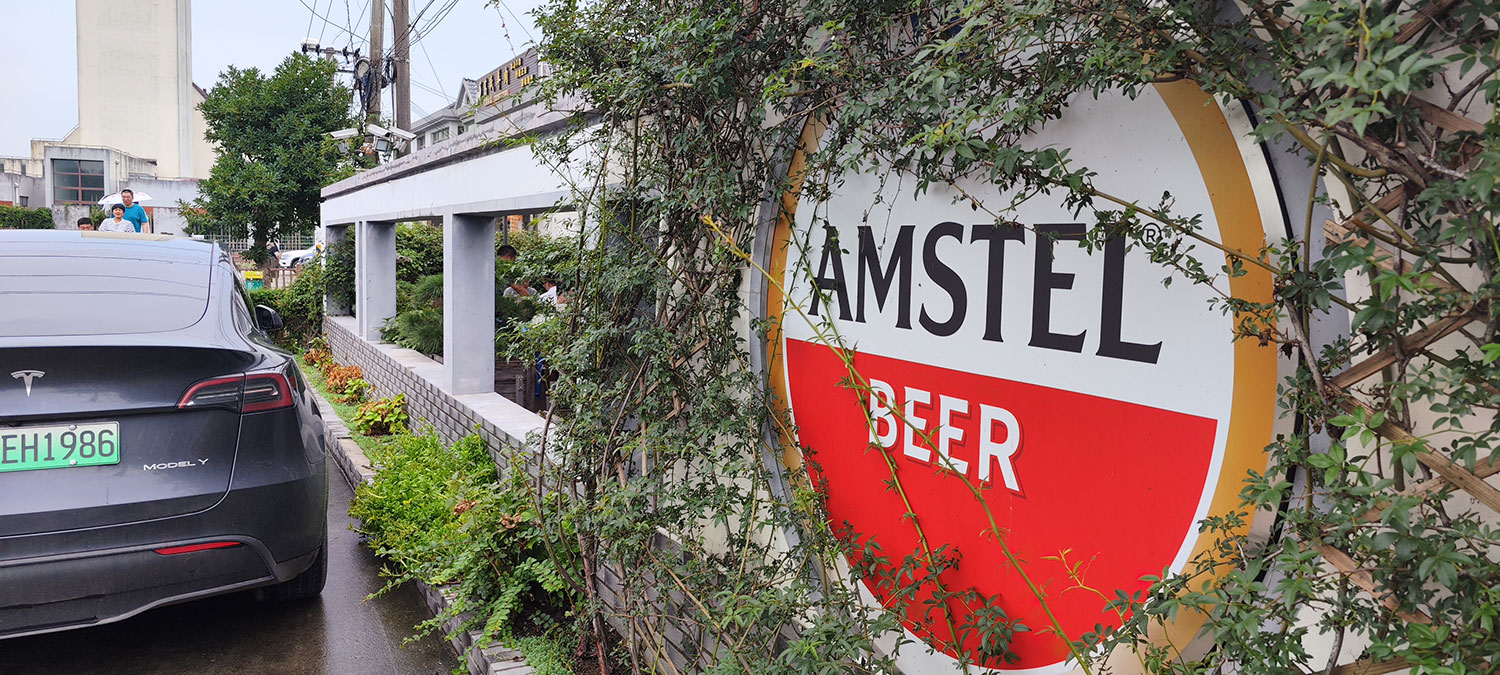
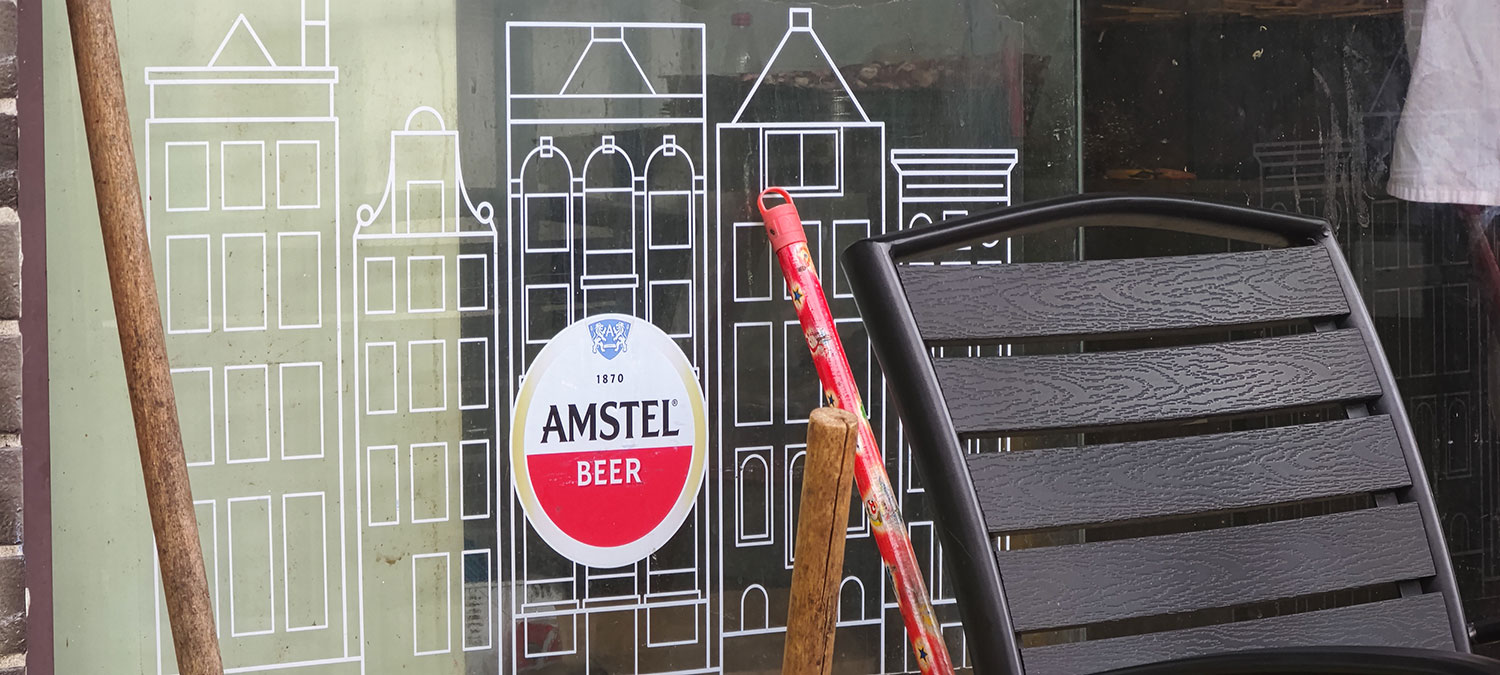
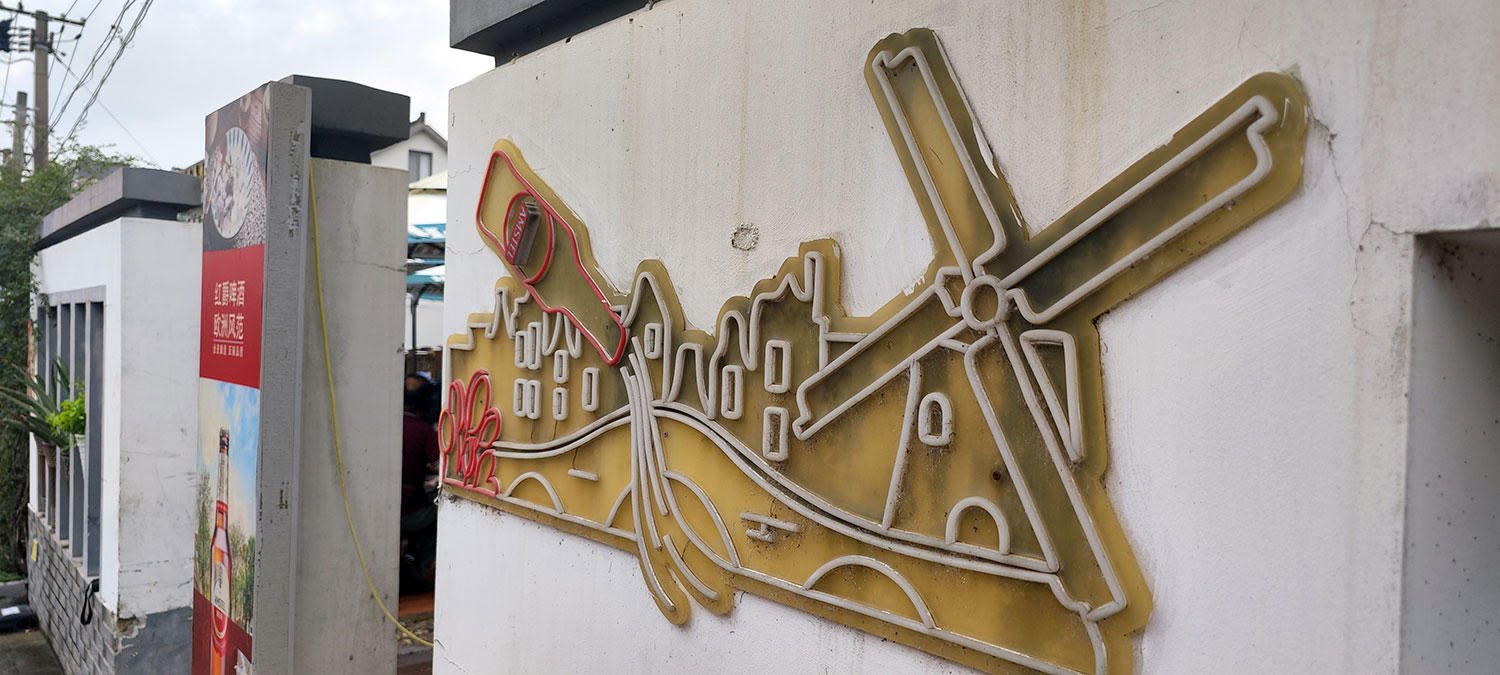
When leaving, I ask the boss about the Amstel logos on the outer walls, because it’s not a very well-known brand outside of the Netherlands, hence I’m surprised to see this logo with drawn Amsterdam houses on the outskirts of Shanghai.
When leaving, I ask the boss about the Amstel logos on the outer walls, because it’s not a very well-known brand outside of the Netherlands, hence I’m surprised to see this logo with drawn Amsterdam houses on the outskirts of Shanghai.
“Oh, I don’t know. It’s from long ago. We only sell 喜力 (Heineken) now. Oh, that’s also a Dutch brand?”