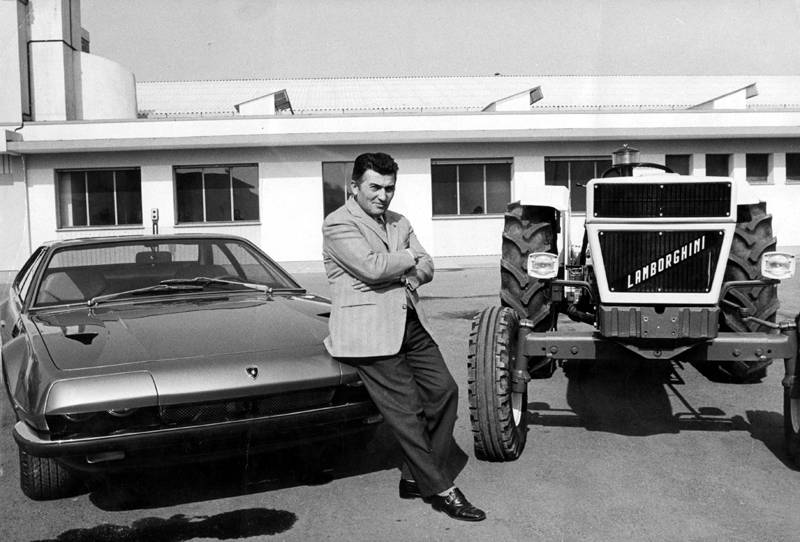
When the clutch of his Ferrari 250 GT failed, Ferruccio Lamborghini had enough. The Italian, rich from building tractors, had already returned four times that same year to the factory in Maranello. With his fifth return, he stepped to the office of the twenty year older Enzo Ferrari, to tell about the woes of the 250 GT and give a few tips on how to improve the clutch. Enzo Ferrari laughed it away, and told Ferruccio to stick with building tractors.
Insulted Ferruccio left, but instead of moaning, he decided to build his own sport cars, yielding a threatening bull on the front, instead of the prancing horse. The creations of Lamborghini where quickly admired, with the fine Miura as pinnacle.
The story of the Italian car-manufacturer is iconic for finding possibilities in displeasure. It’s what Thomas Edison once said: “Discontent is the first necessity of progress.”
There’s plenty of other examples. Daniel Ek began Spotify to counter the illegal downloading of music: “Better than piracy”, said the original slogan. Blendle hated paywalls, Kanishk Parashar and Karthik Balakrishnan were tired to carry multiple cards in their wallets, and thus promptly invented ‘Coin’. The team behind Peerby didn’t want to buy several products which they would only use sporadically. And Bitcoin is a form of protest as well, against the might of banks.
Vandebron, where I fondly work, started from discontent, too. The interest of big energy corporations were simply not aligned with customers, producers, or the climate. They answered the rising demand for green energy, not by creating more generating capacity, but simply by buying foreign certificates, thus officially greenwashing grey energy.
Utilities are fundamentally unsuited to providing renewable energy because they have legacy investments in fossil fuels, which they need to recover. They also have an interest in selling more units, which isn’t good from an efficiency point of view.
It’s typical for established companies to conform in maintaining the status quo, whether it’s the energy-market, music- or car-industry. Yet, luckily, there’s plenty of innovations who break that status quo and disrupt multinationals.
Pivotally, to put something in motion, you’ve to make choices,
whether it’s a Ferrari, or green energy.