If George Orwell, one of the best essayists, were alive today, he’d be firmly against AI. Not because of 1984 or ‘Big Brother’, but because in ‘Why I Write’, he listed four motives for writing;
- Historical impulse
- Political purpose
- Aesthetic enthusiasm
- Egoism
Neither of these motives survives if you let AI do the writing for you.
Historical impulse is the closest to ‘journalism’, capturing something because it happened, to create a physical object of the truth; to etch letters into stone, write them on a page, or show them on a screen — or capture it on a photograph. The truth becomes an object to look at from multiple perspectives, to hold it against the light like a curious gem. AI cannot do that. Technically, sure. You could upload two photos and generate a wedding video with AI, but you film your wedding because you want to capture the moment.
Similarly, I love visiting old towns before they disappear. I want to write down their names and record their photographs, distill how they made me feel. I want to say; this once was, this mattered.
Political purpose goes both ways. One could make the case that AI is the amalgamation of political viewpoints, therefore very mild and not political, lest it would offend anyone. But I think the opposite is true as well. ChatGPT or Gemini being extremely mild and refusing to say anything controversial is in fact political. It refuses to go against the grain. AI would never table new controversial viewpoints such as J.K Rowling. Whatever you think of her isn’t the case; AI just couldn’t, and wouldn’t. Paul Graham in ‘What You Can’t Say‘ talks about these moral taboos also, and how they shift with time. This is why I appreciate my friends; rather than letting me be comfortable, they’ll tell me when I do something wrong.
The importance of non-AI writing for political purposes is also paraphrased in Orwell’s ‘Politics and the English Language‘: “If people cannot write well, they cannot think well; and if they cannot think well, others will do their thinking for them.”
Then there’s aesthetic enthusiasm. In early 2026, things written by AI are so obvious; an overuse of similes, adverbs, and words like ‘journey’ or ‘innovation’, the ‘It’s not X, but Y’ comparisons, the overly positive tone, and the total lack of character like some kind of cheap corporate speech. It’s like using stock photography.
But even if AI becomes better at not sounding like an LLM, it’s still an amalgamation of styles, or rather; the absence of style. Grammarly has dozens of suggestions to my writing but I ignore many because I want to choose the style. James Salter wrote this line in Burning the Days: “His expensive shoes, all polished, were lined up in the closet, his many suits.” AI wouldn’t write that, as it’s grammatically incorrect. But Salter does, because he prioritizes the sound, and reading his words, you feel as if your eyes are moving around in the room, scanning for stuff.
That’s the aesthetic half. The enthusiasm part, I don’t see how you could outsource that to AI. Writing is fun. It’s satisfying to create something that didn’t exist before. Some people do that through pottery, cooking, or painting — and I like writing.
There was this interview with an entrepreneur who mentioned how hard it is to learn a musical instrument, and how he wanted to automate that. But the whole process of creation seemed lost on him — like why people play guitar around a campfire, or why it sounds good.
I doubt my mother will ever become a famous artist, or that her paintings will appear in the Louvre, or that her paintings sell for lots of money. But she takes enjoyment out of it, and socializes in her painting club. Sometimes she’ll pose in front of a new painting she has made, brimming with joy. And I love the fact that she paints, as well as what she paints. Those two things are not the same, although closely related.

Then the last one, sheer egoism. If you haven’t created it, how could you satisfy your ego with it?
I could make dinner for my friends by ordering Indian food, dumping delicious curries from the plastic food containers into my own bowls, and serve it on the table as if I made it. I might fool them, but I cannot fool myself. The same with writing. You still cannot lie against yourself.
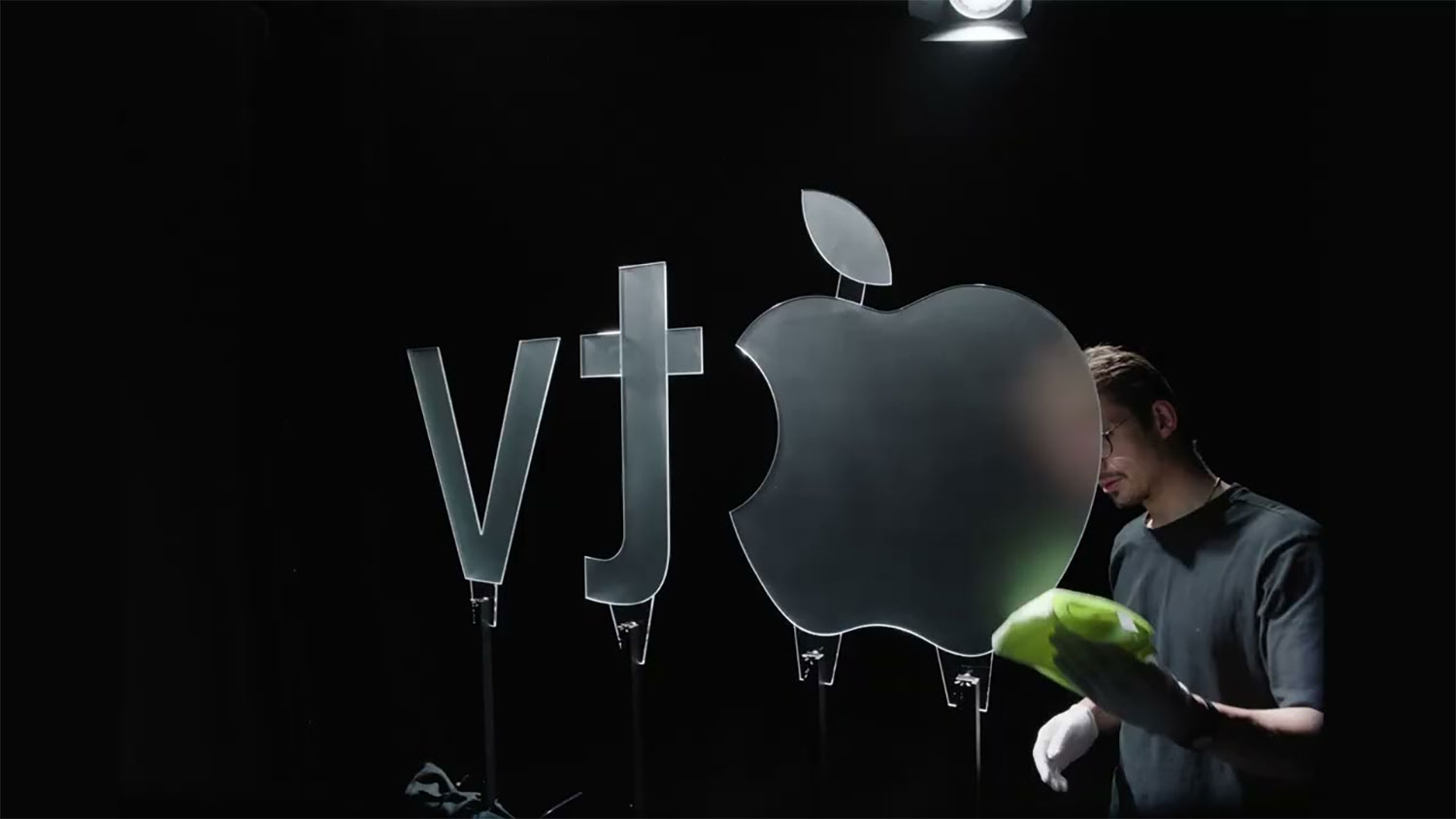
That’s from a writing point of view. From the consuming perspective, I also want to see human-made content. Take, for example the Apple TV logo intro. It is made from glass by hand, rather than CGI. I don’t think people would be able to distinguish between the two if both were made, but the fact that they actually made it by hand sends a completely different message — one you could not embed if it was generated by some text inputs.
The same from Andrew James McCarthy’s photograph, ‘The Fall of Icarus’. AI could have made that, but it wouldn’t be the same. Perhaps the actual content is the making-of video. There’s meaning in the process, not just the outcome. Or take the exam that London taxi drivers have to take, memorizing each street in the city. It hits differently because it incorporates effort and celebrates human capability.
Tom Adams: “When nearly anything is possible through a few lines of text, the outcome loses its impact for me. Building something on your own—whether with your hands or through careful thought—requires risk and commitment. Boundaries and limits shape the process, and overcoming them had to be worked out.”
On a recent flight, I watched a documentary about a pizza place in New York, how the two founders made their pizza dough, measuring temperature and carefully mixing carefully chosen ingredients. That enthusiasm gives me hope. People can buy frozen pizza cheaply at their supermarket, but we still need places like Ceres in our world.
Creation is a process, a verb, a skill. It’s to show love for thoughts and meaning. And it’s maybe most true for writing, because unlike creating a feature movie or a 3D animation, all you need is words on paper or a screen. Paul Graham: “In preindustrial times most people’s jobs made them strong. Now if you want to be strong, you work out. So there are still strong people, but only those who choose to be. It will be the same with writing. There will be smart people, but only those who choose to be.” I think smart here can also be replaced by ‘people who write aesthetically’. He also makes that point, in ‘Good Writing‘.
All this will remain important. I do a lot of exploration, and I see our cities becoming increasingly homogenized with the same multinational chains everywhere. At the same time, what we consume on our phones is increasingly decided by an algorithm on social media. Not just what users choose to interact with, but also because most content creators will optimize for what works for views (not what they think the world should read). All of this in a media landscape that is increasingly written by AI. And yet I crave for personal stories. With my website, I try to provide a space for that, and luckily, there are so many other personal blogs out there.
Sure. AI helps me to find words, or translating — but writing? I will not let AI do that. Because it can’t.