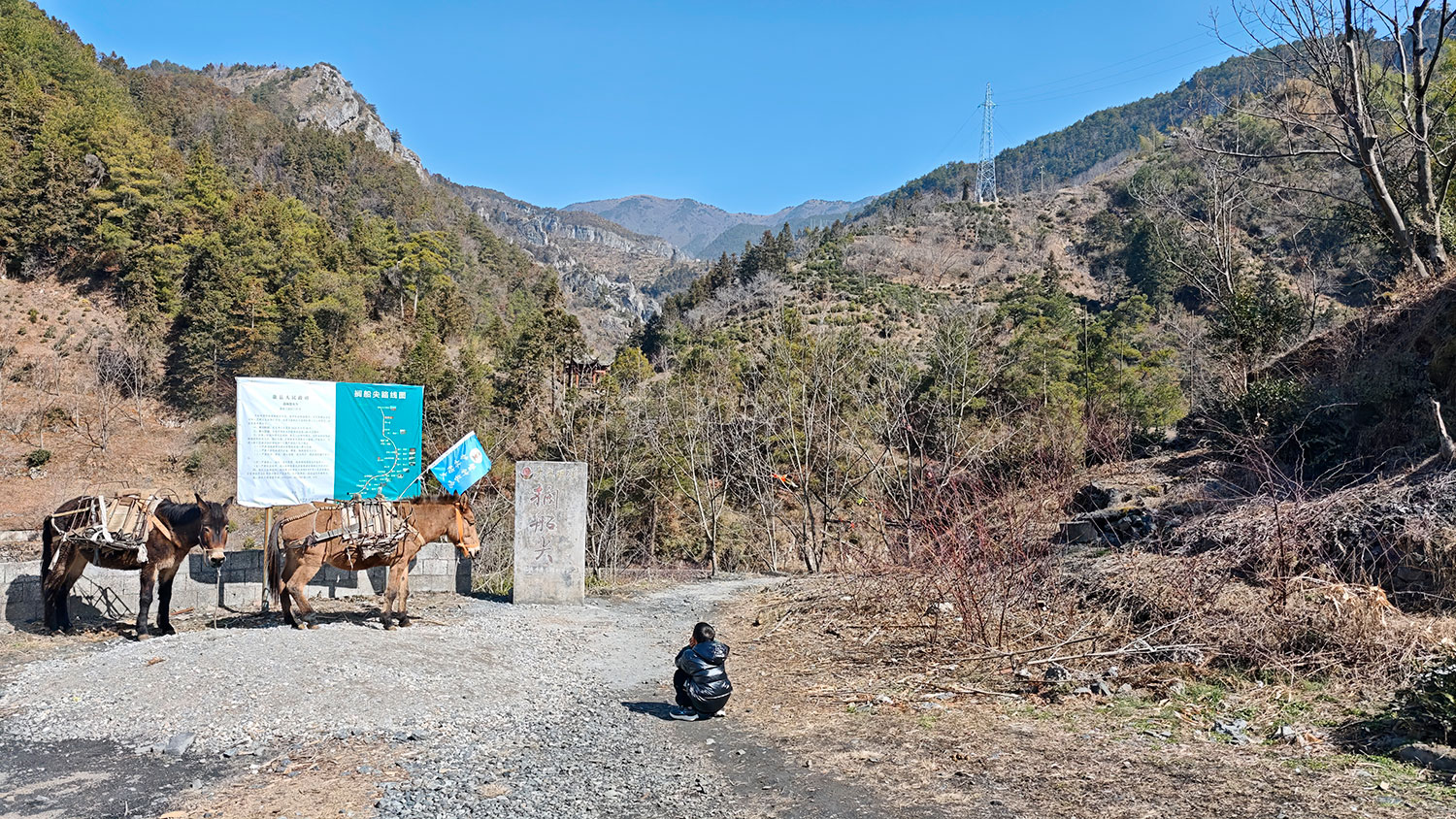
The road becomes too small for cars to drive on, so we park, pack our bags, and continue on foot. Two donkeys are waiting where the path starts, and they — like us, are going to the abandoned village of Zaotai (皂汰村).
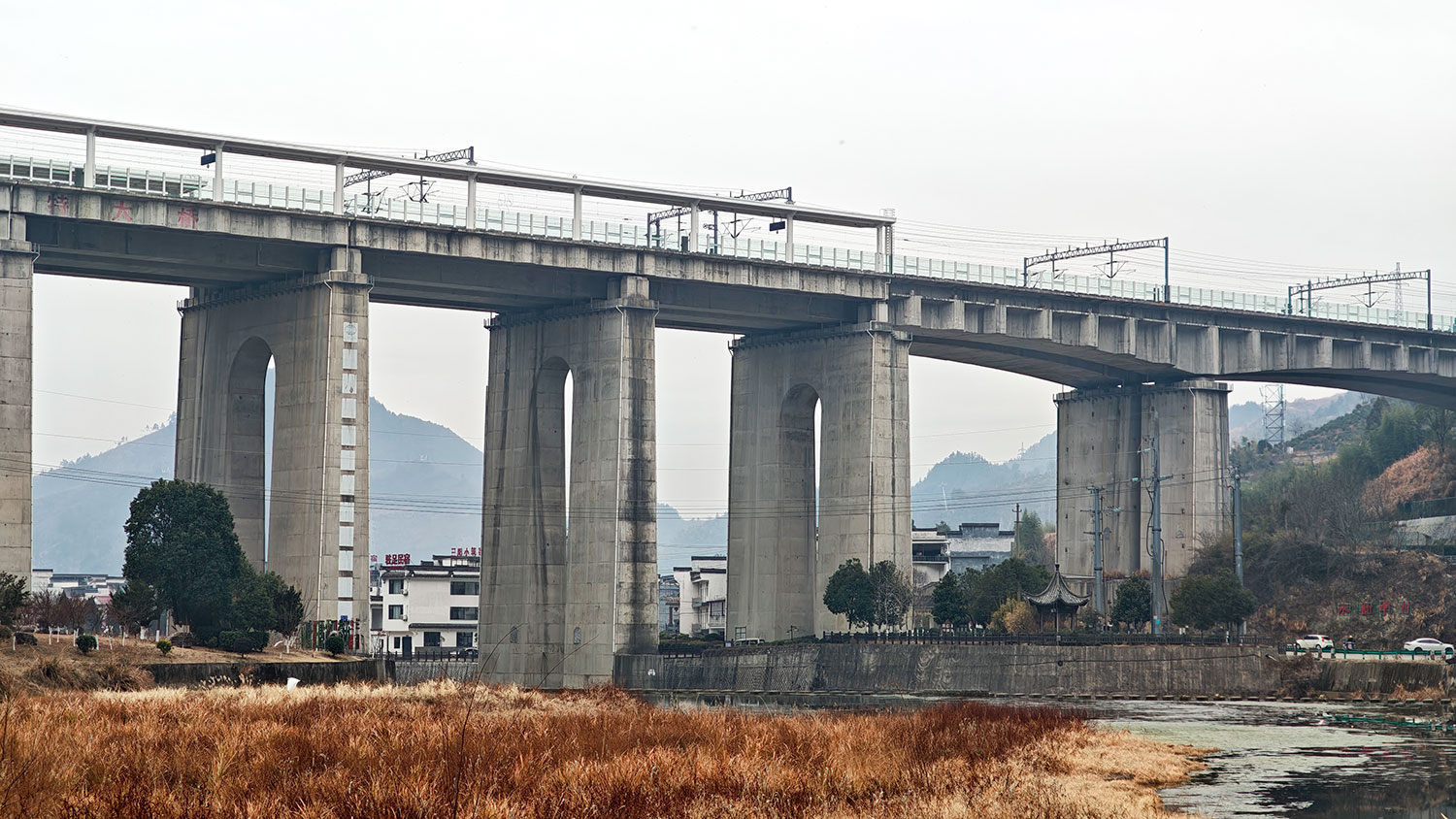
We departed in the morning from our hostel in Sanyang (三阳镇), a village between Huangshan and Hangzhou. Sanyang is a typical town in Anhui, with traditional Hui Style architecture (徽派). It has one narrow main road running parallel to the river — occupied on both sides with parked scooters, tricycles, meat hanging to dry, as well as plenty of oncoming traffic. But the picturesque image of the village is completely dwarfed by the high-speed rails, that towers above the buildings. It’s a huge contrast, one that shows two different China’s come together.
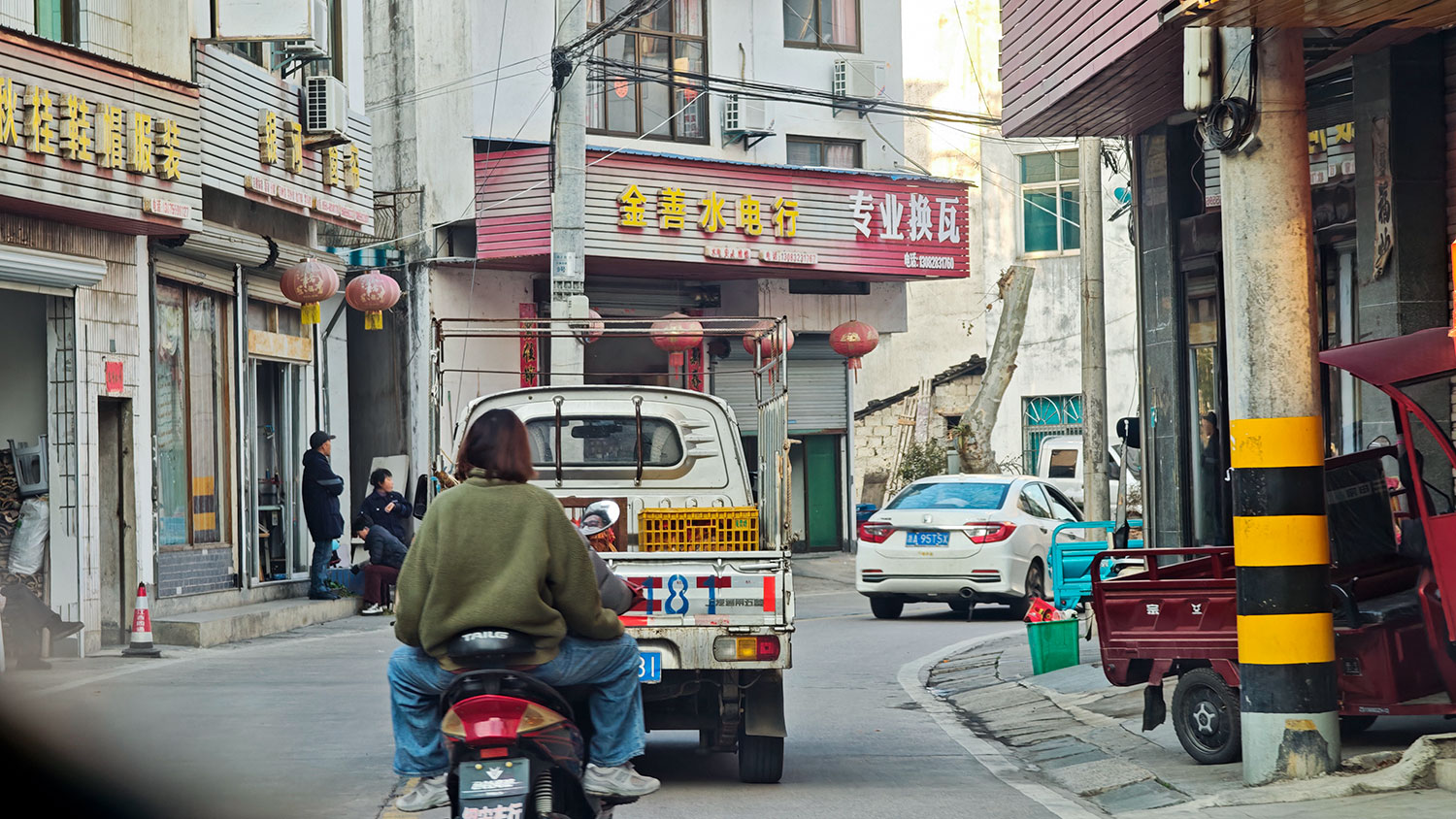
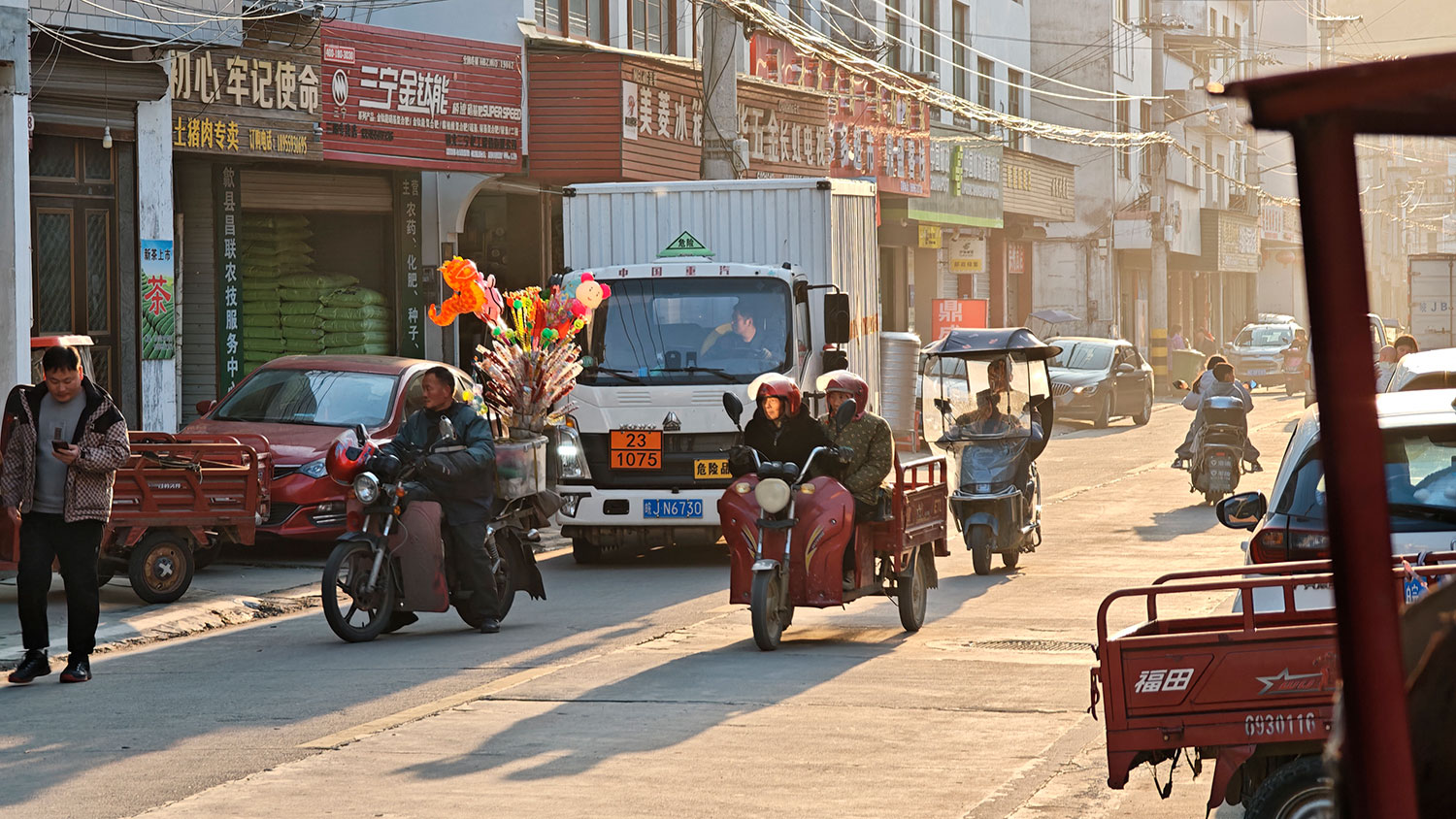
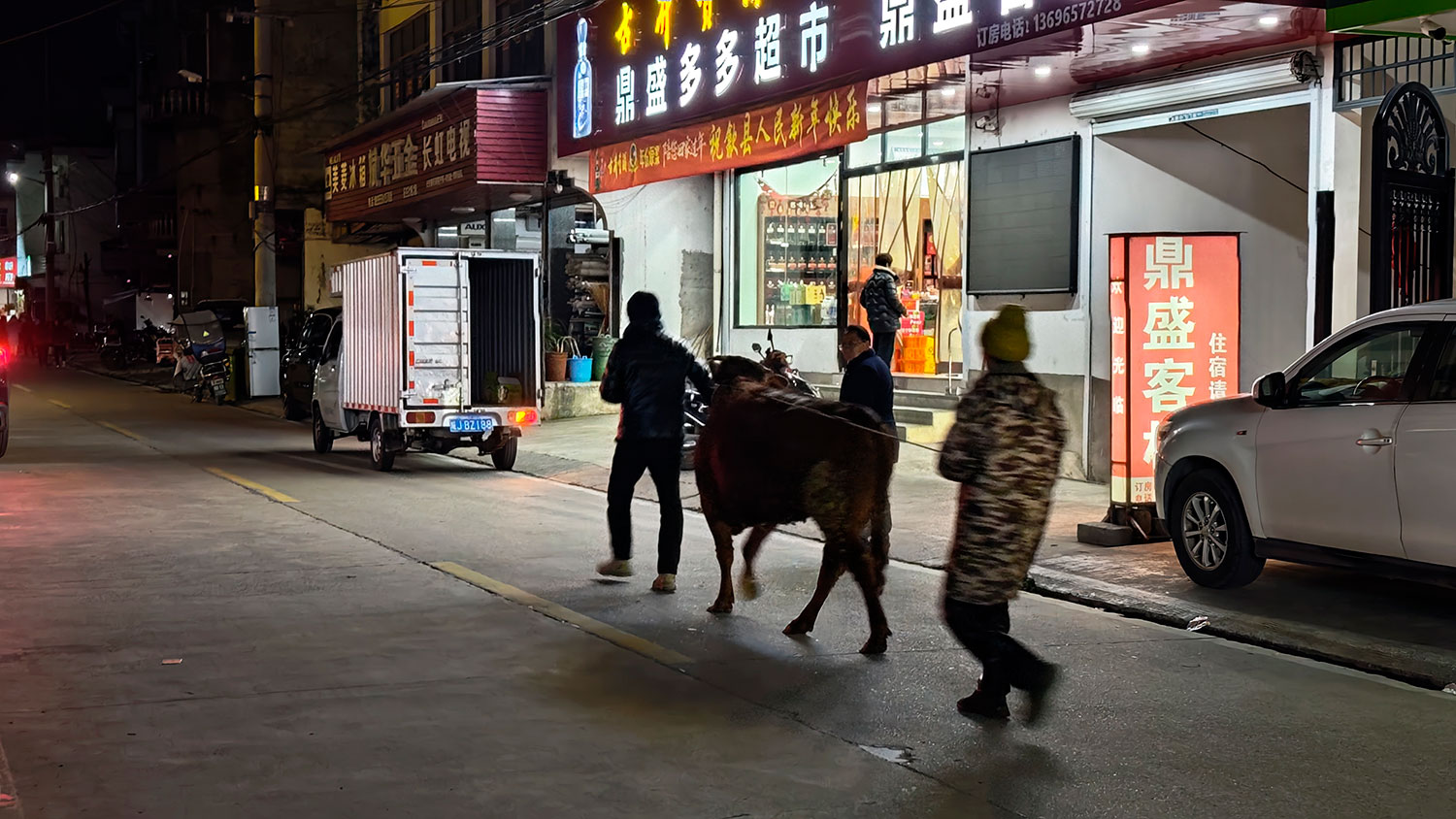
The road to Zaotai is narrow and takes dozens of hairpins. Every once in a while, we cross some buildings that together form a village. This is the ingenuity of Anhui. No matter which corner, hilltop, or valley you go to, there are some people living here. It’s close to Chinese New Year, and the weather is great for February, so in every hamlet, doors are wide open, and people sit on their porches, collecting firewood, chopping up meat, or just having a cigarette and looking at the traffic passing by.
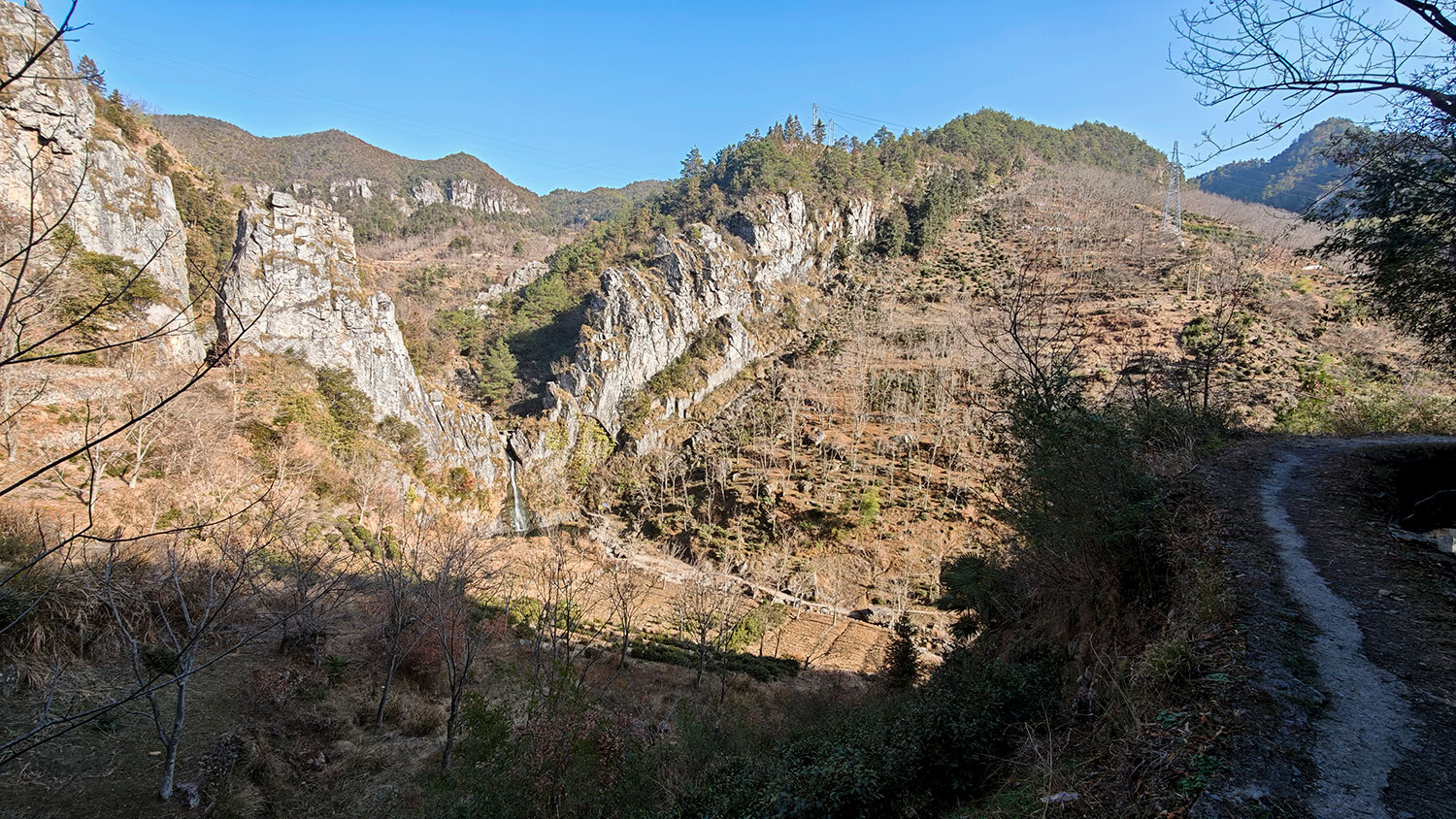
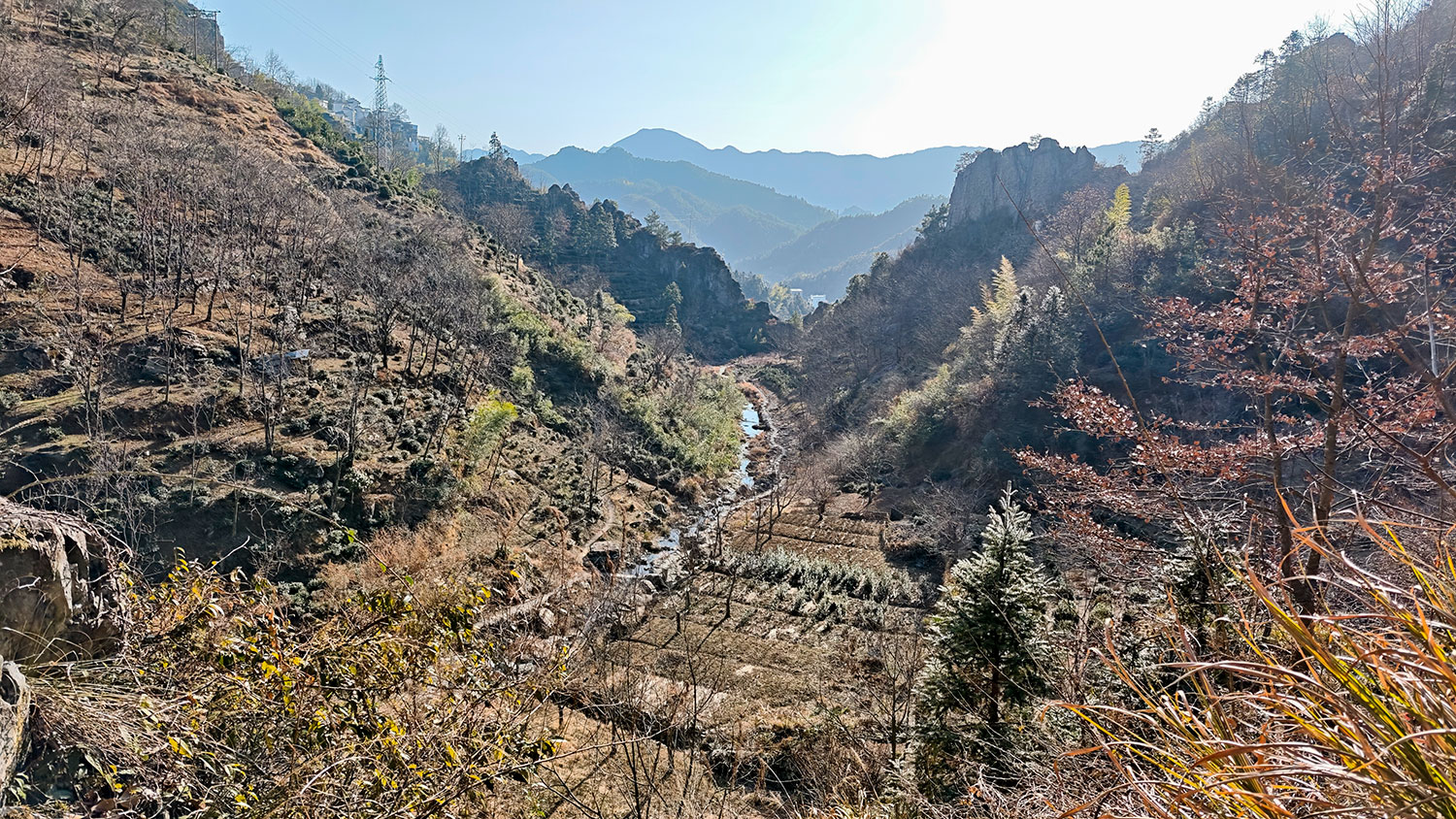
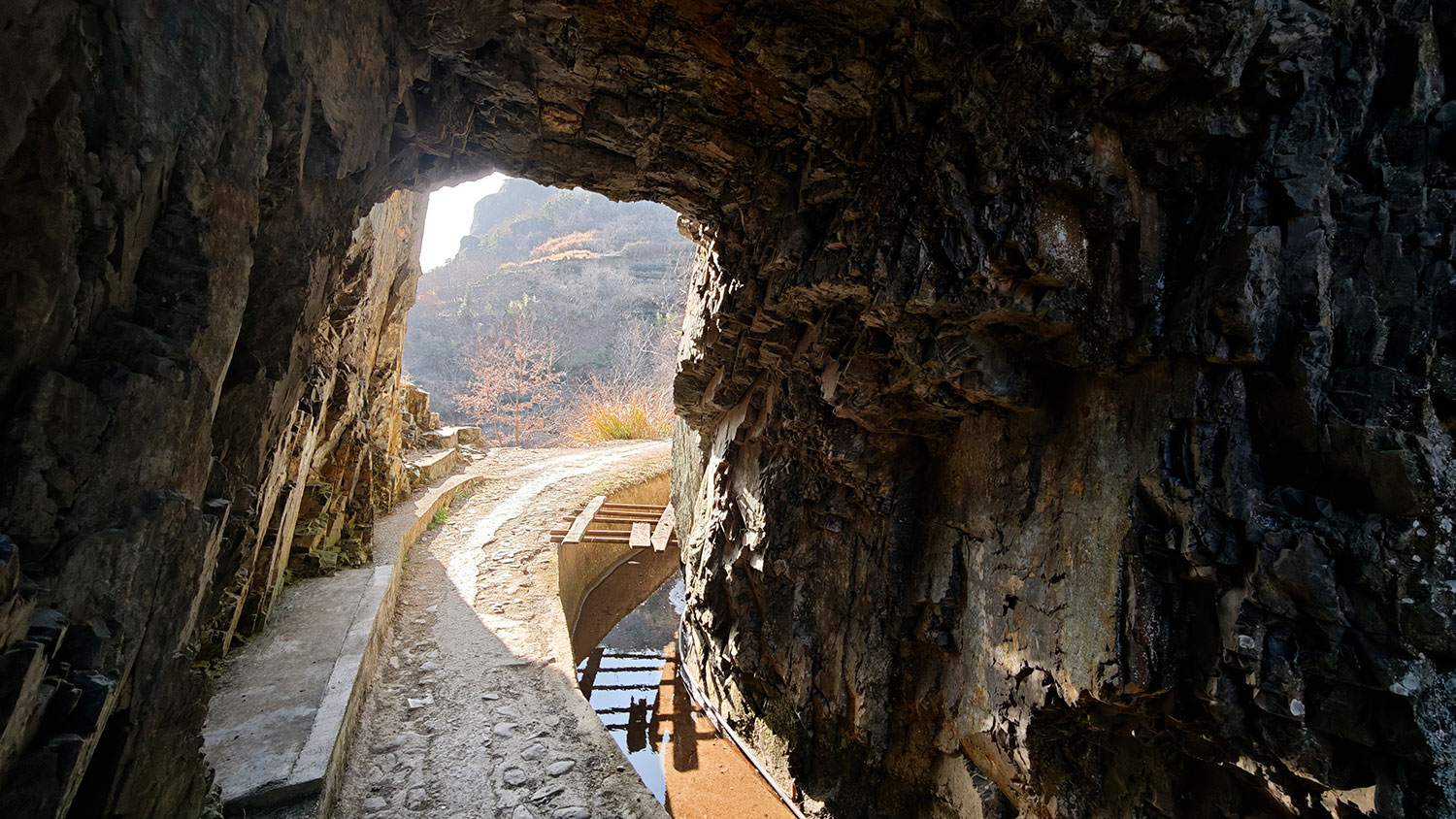
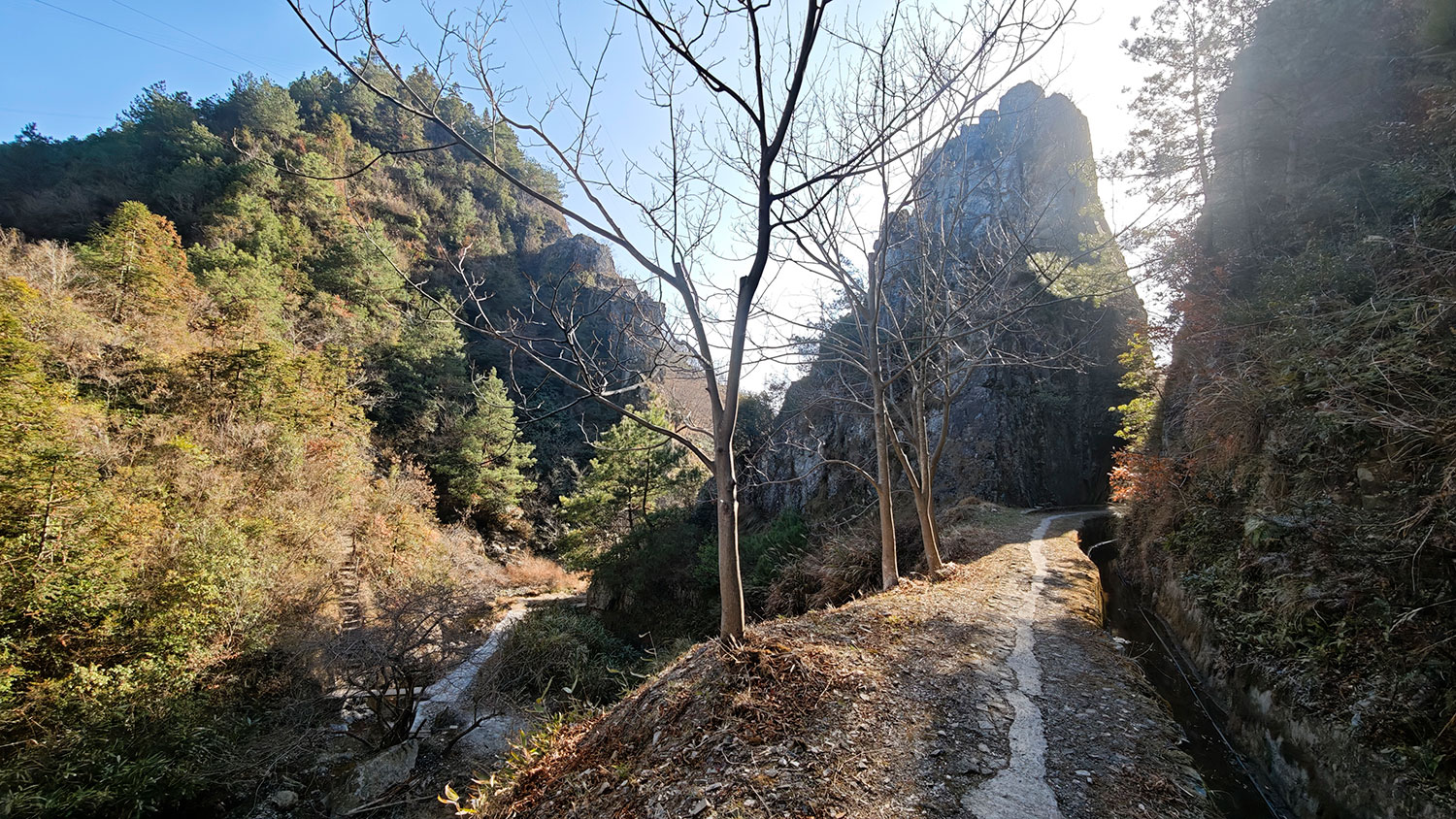
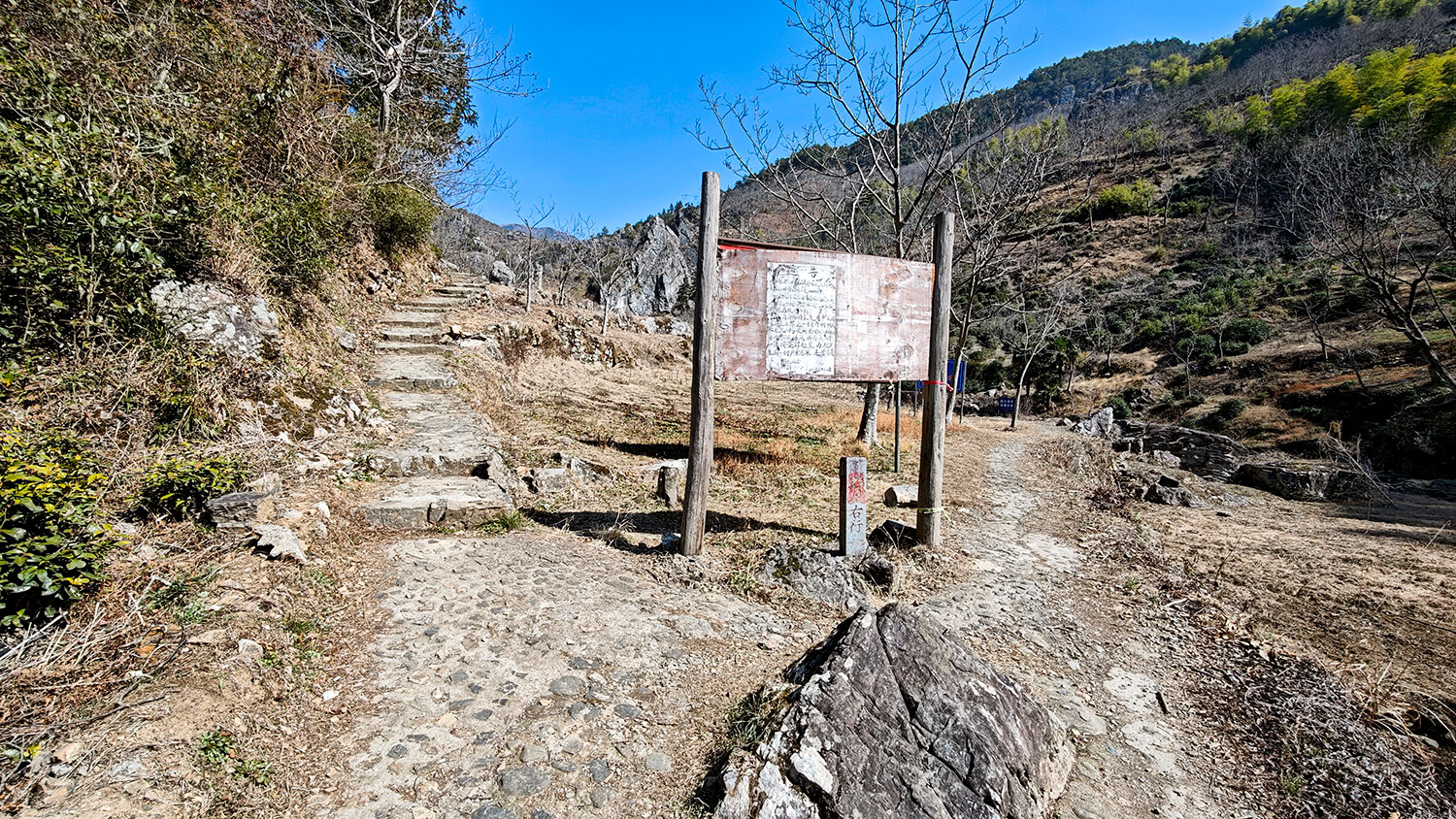
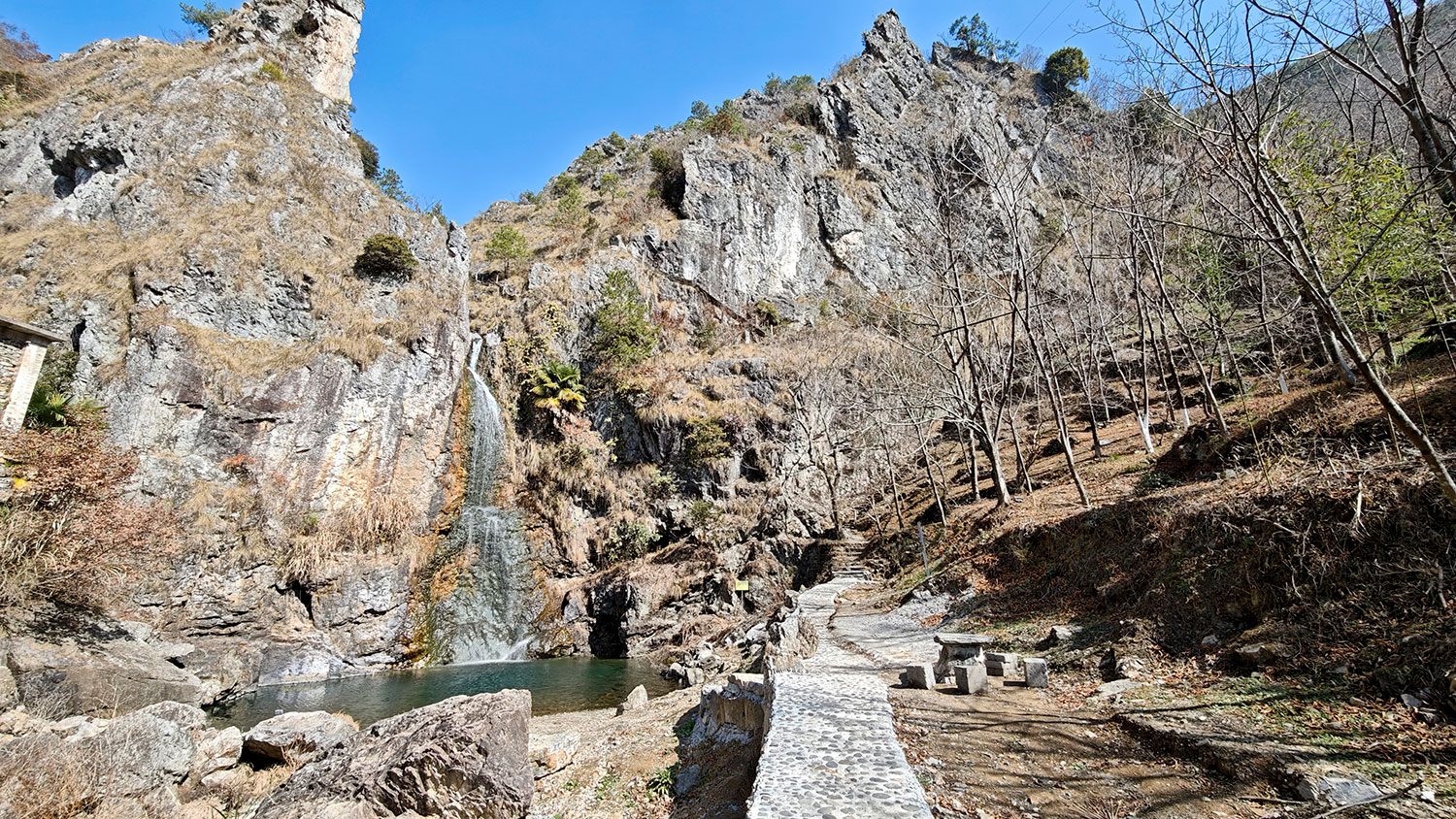
We park at the starting point of the Gechuanjian (搁船尖) trail and set out afoot. Quickly, there’s a fork in the road, and while both lead to the village, the one we picked turns out to be the difficult one, going down the valley, going up several narrow stairs to cross some waterfalls. There’s plenty of quartz in these rocks, and sometimes the sand just glitters in the sun.
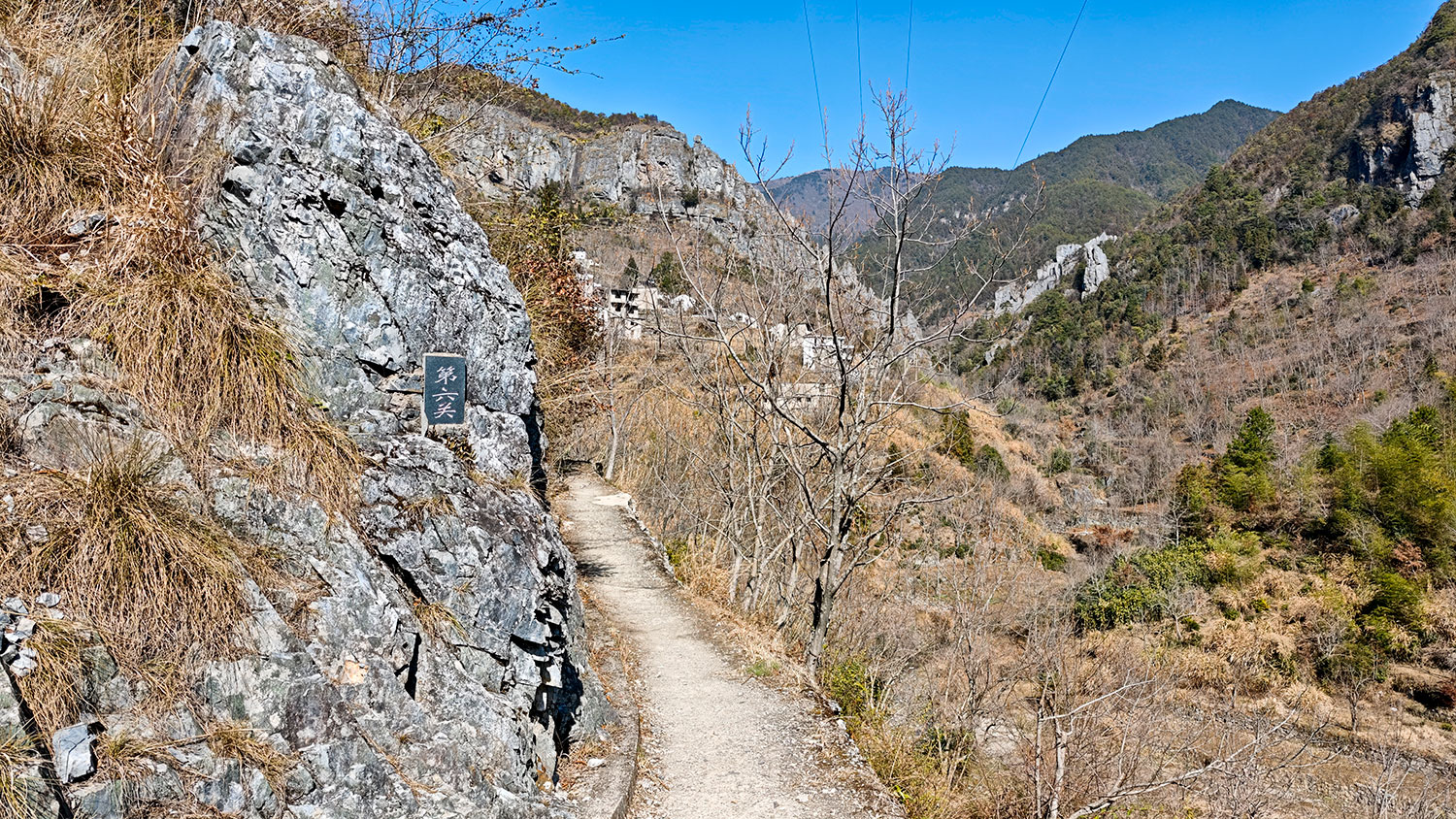
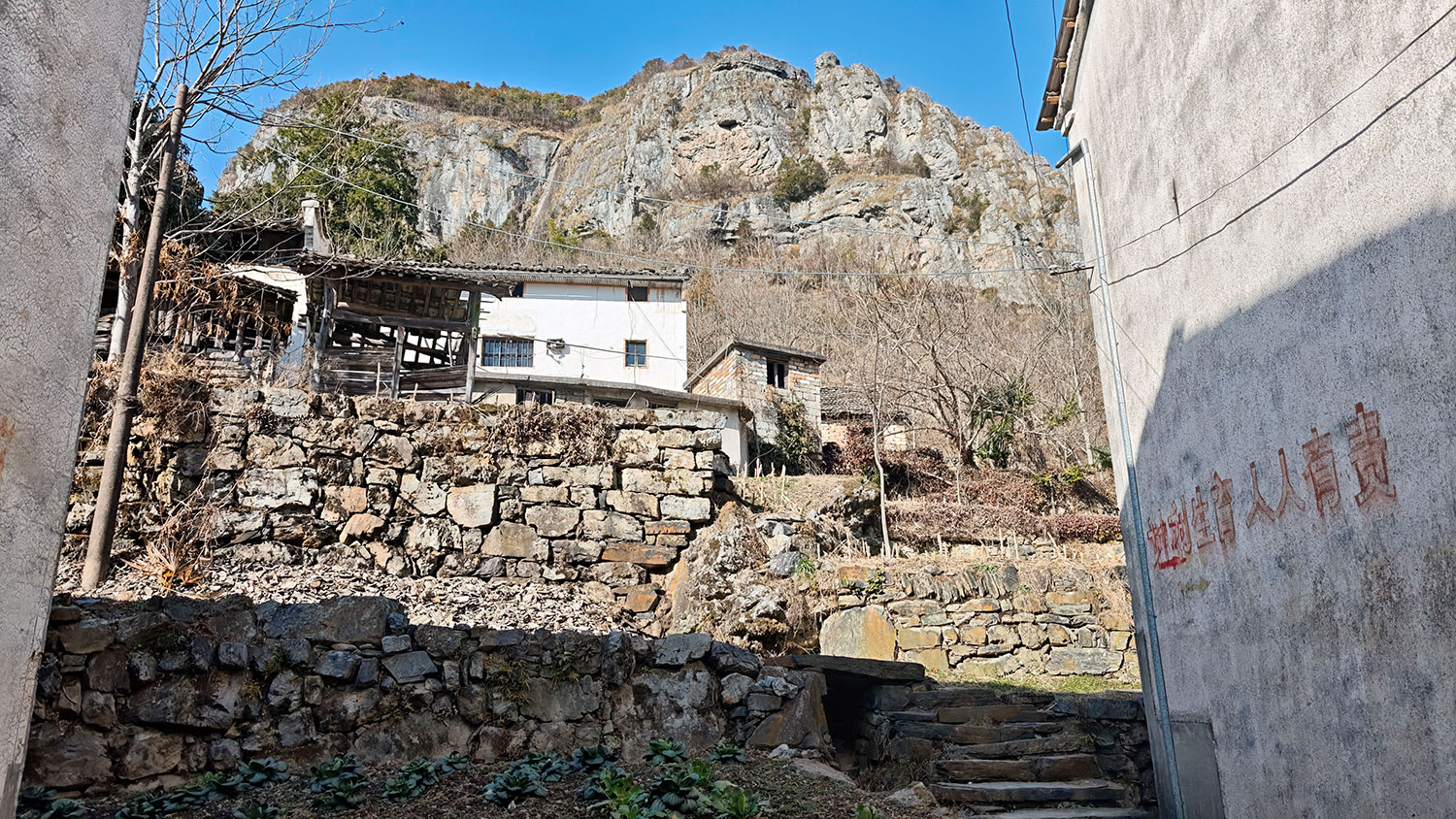
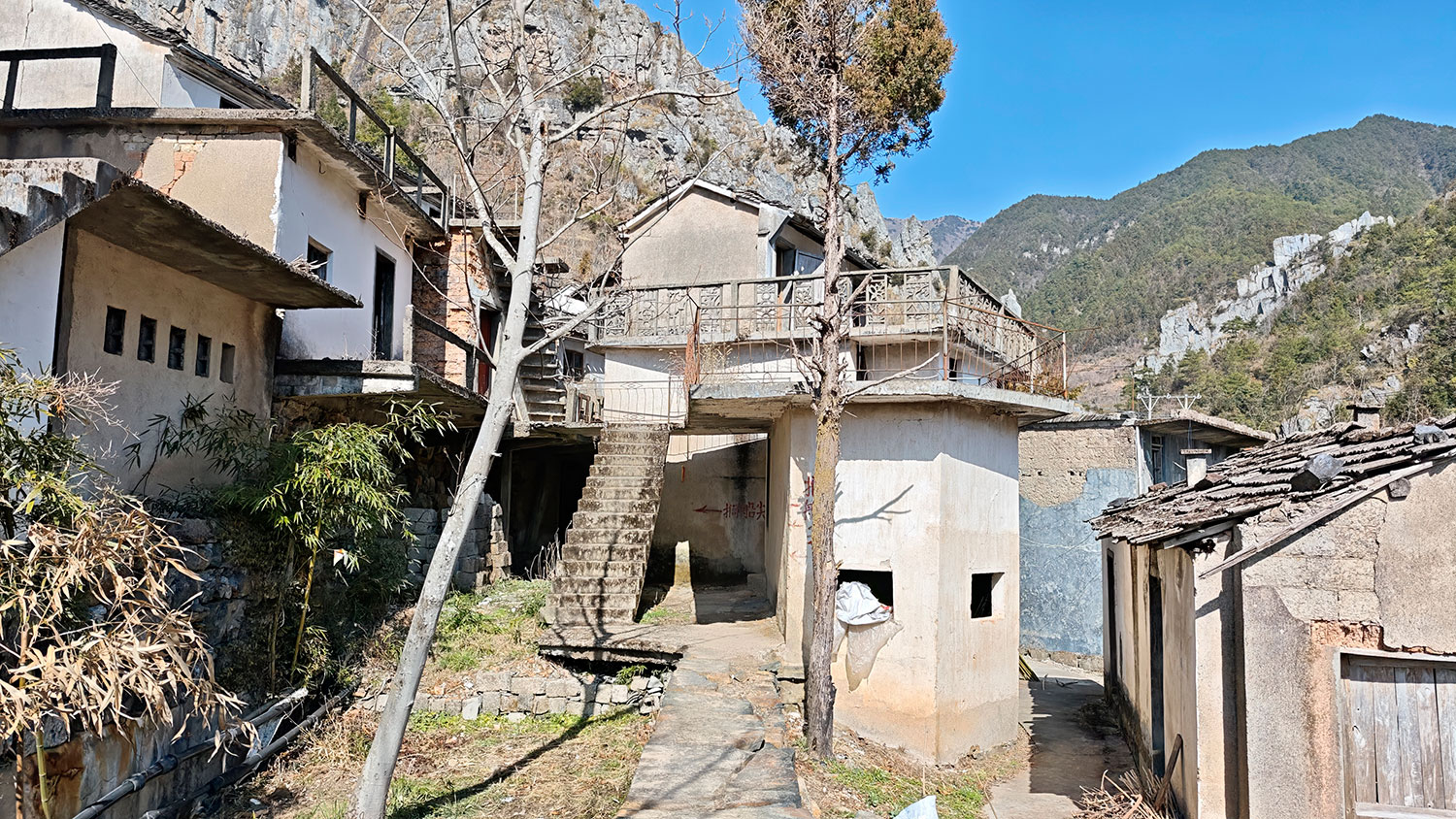
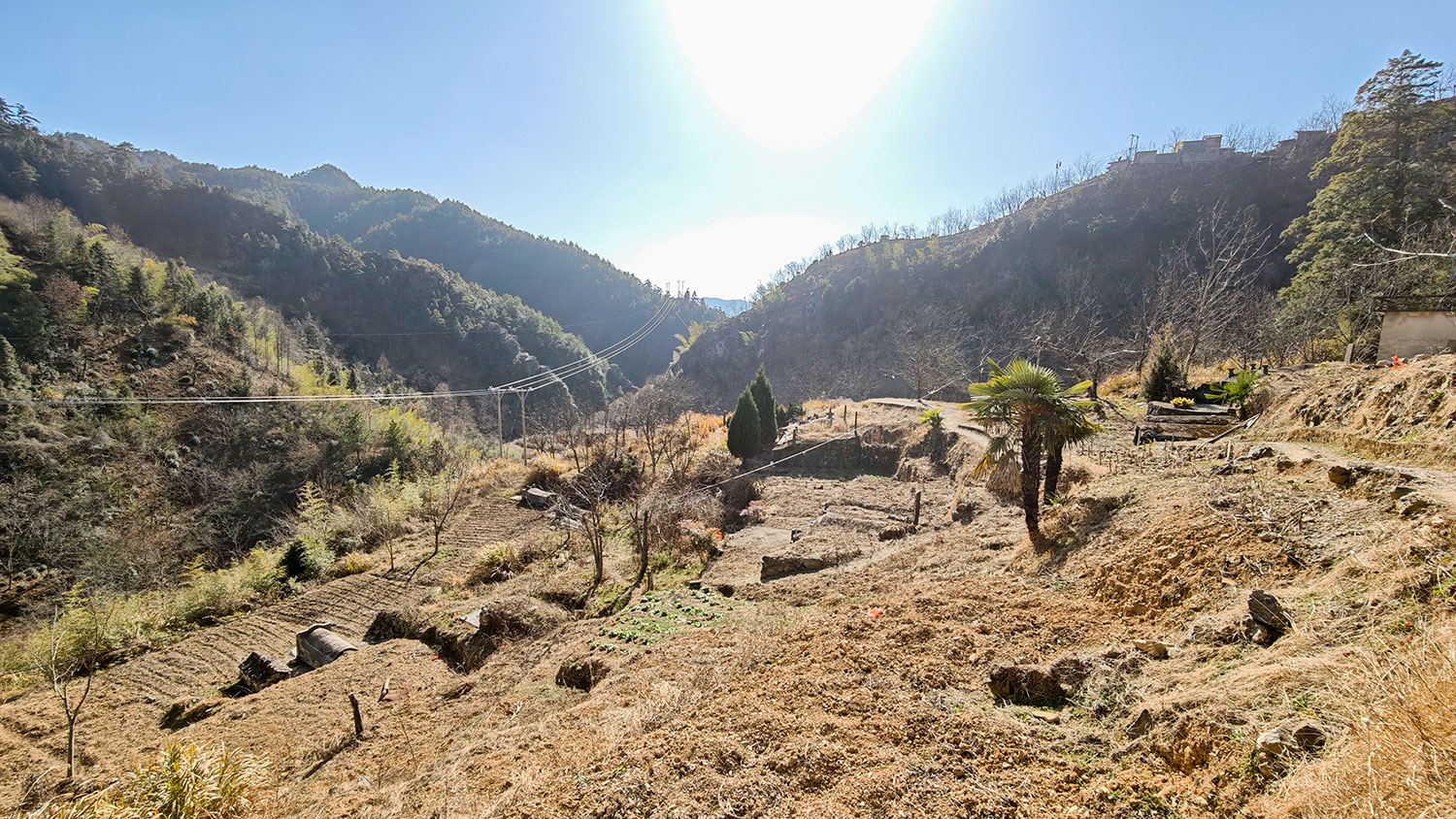
After 90 minutes of sweating, we arrive at The Sixth Gate (第六关) of Zaopai and see the village ahead. It’s on the south slope, overlooking a deep valley.
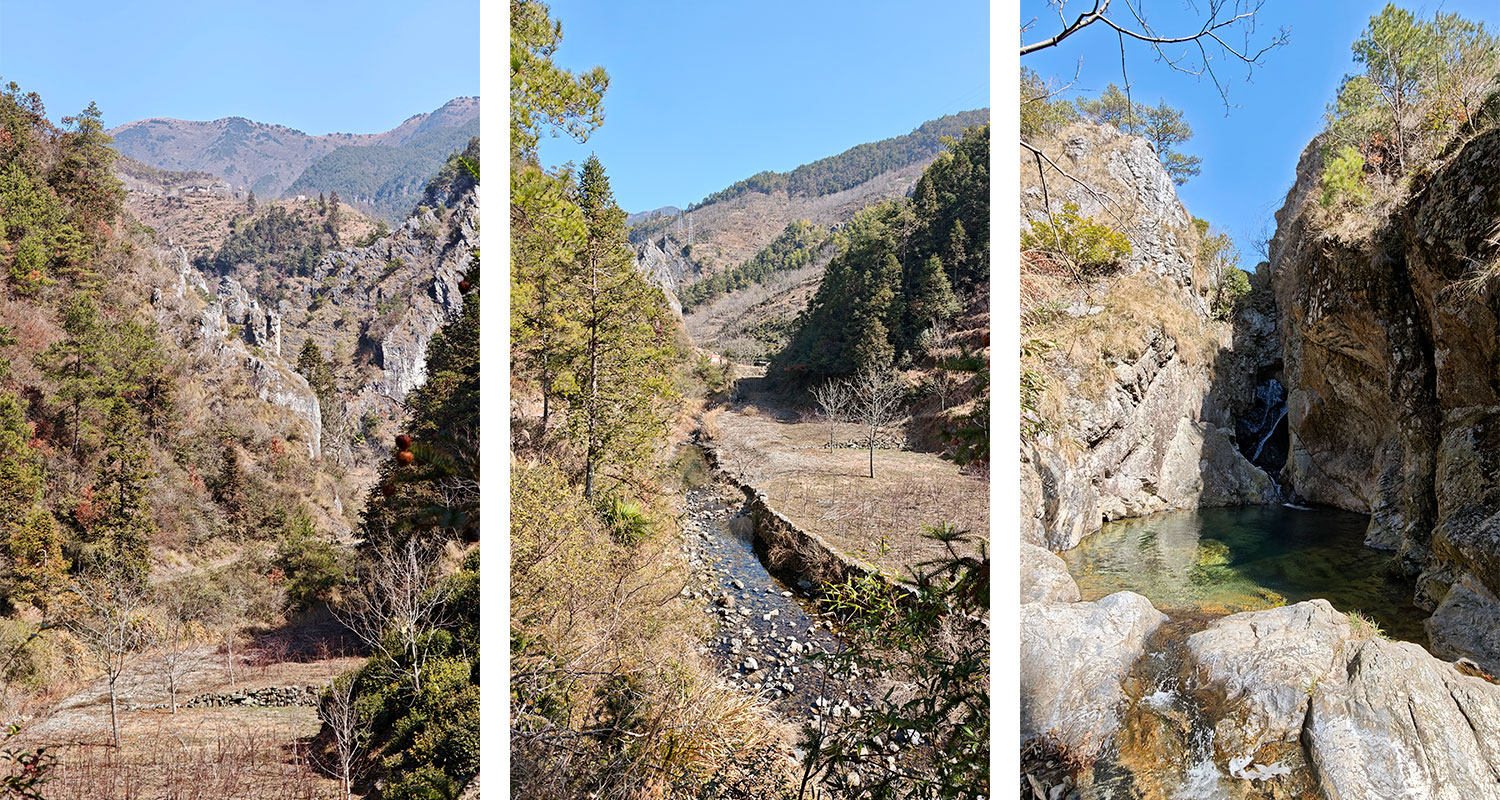
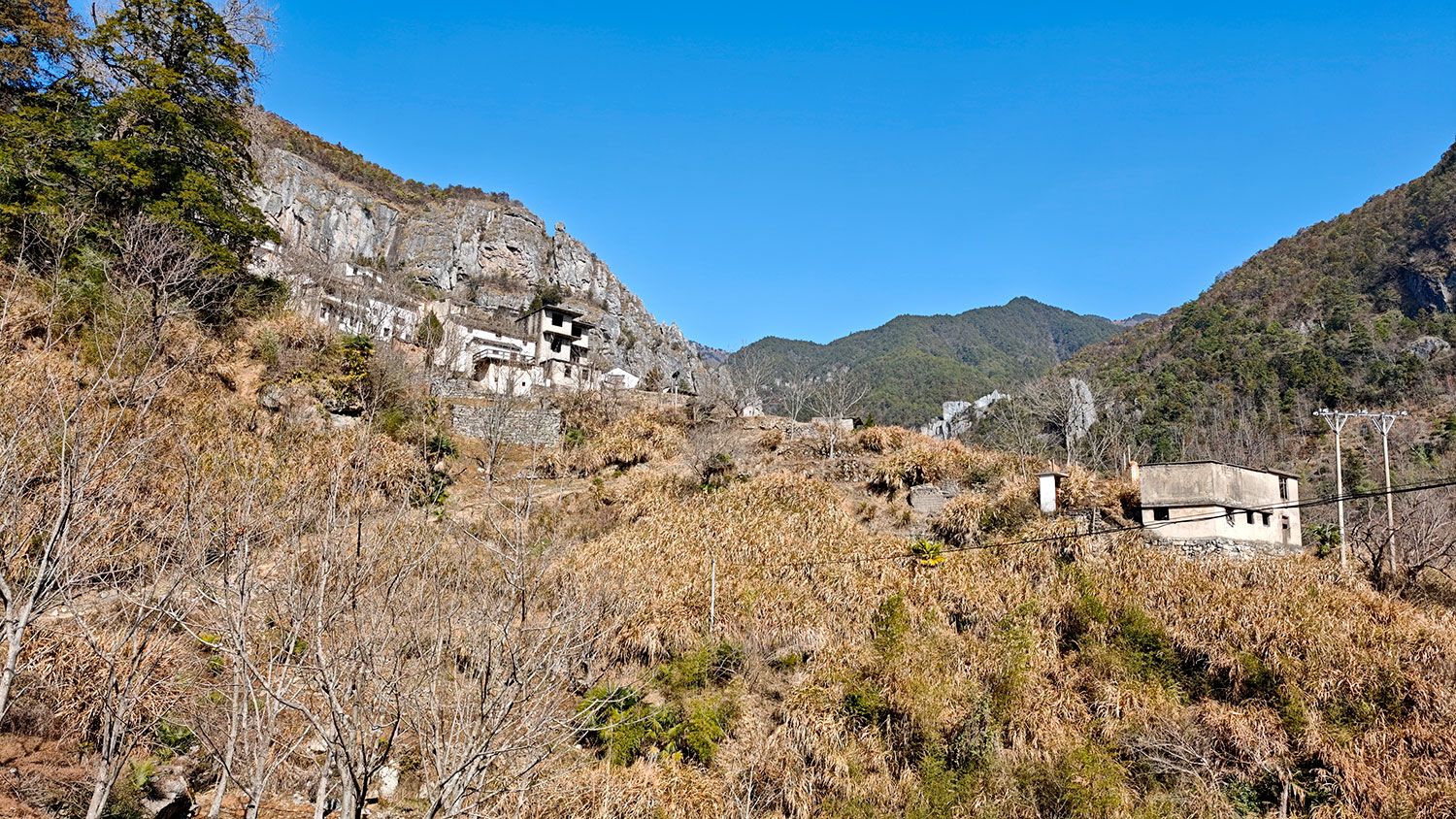
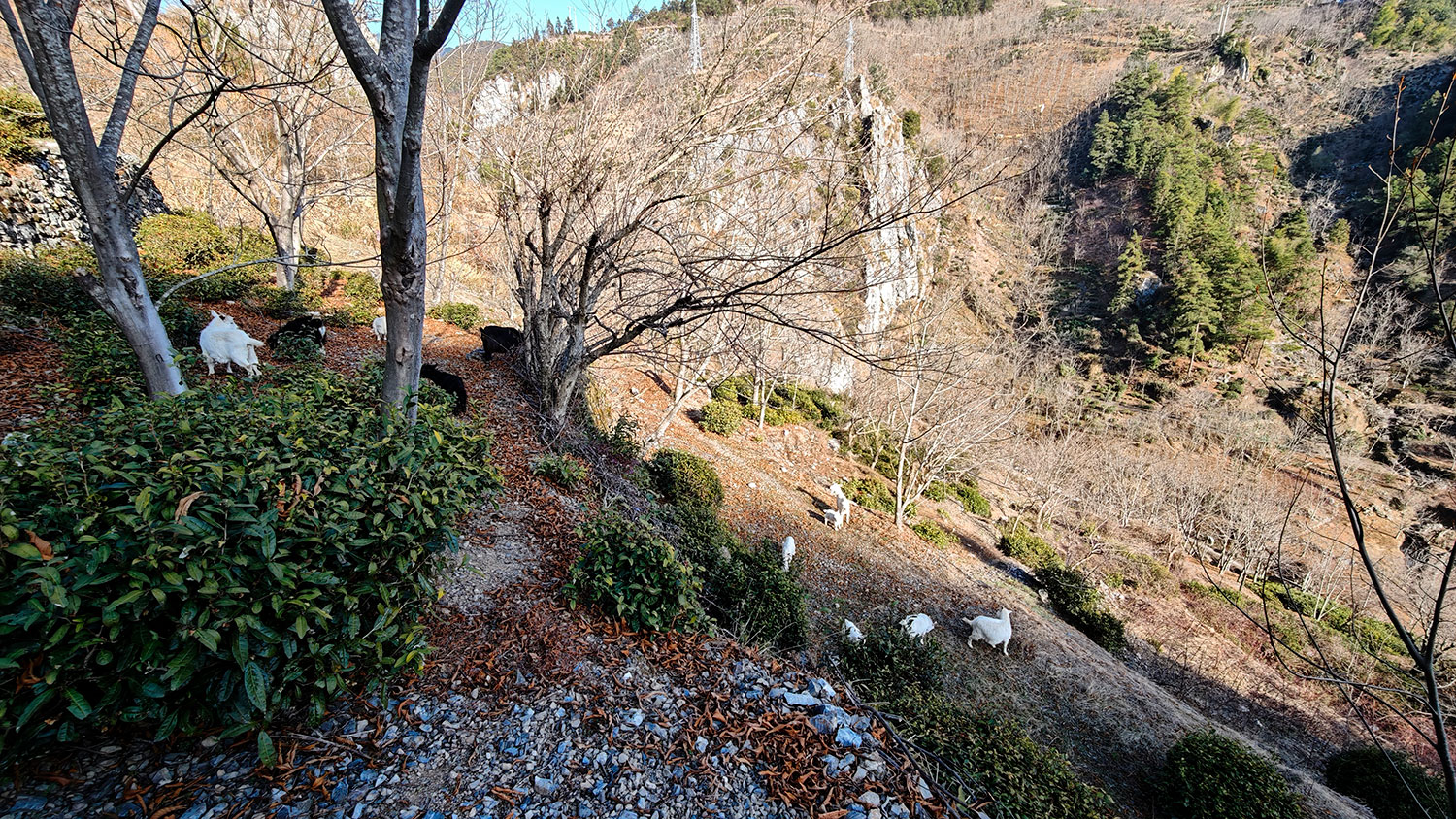
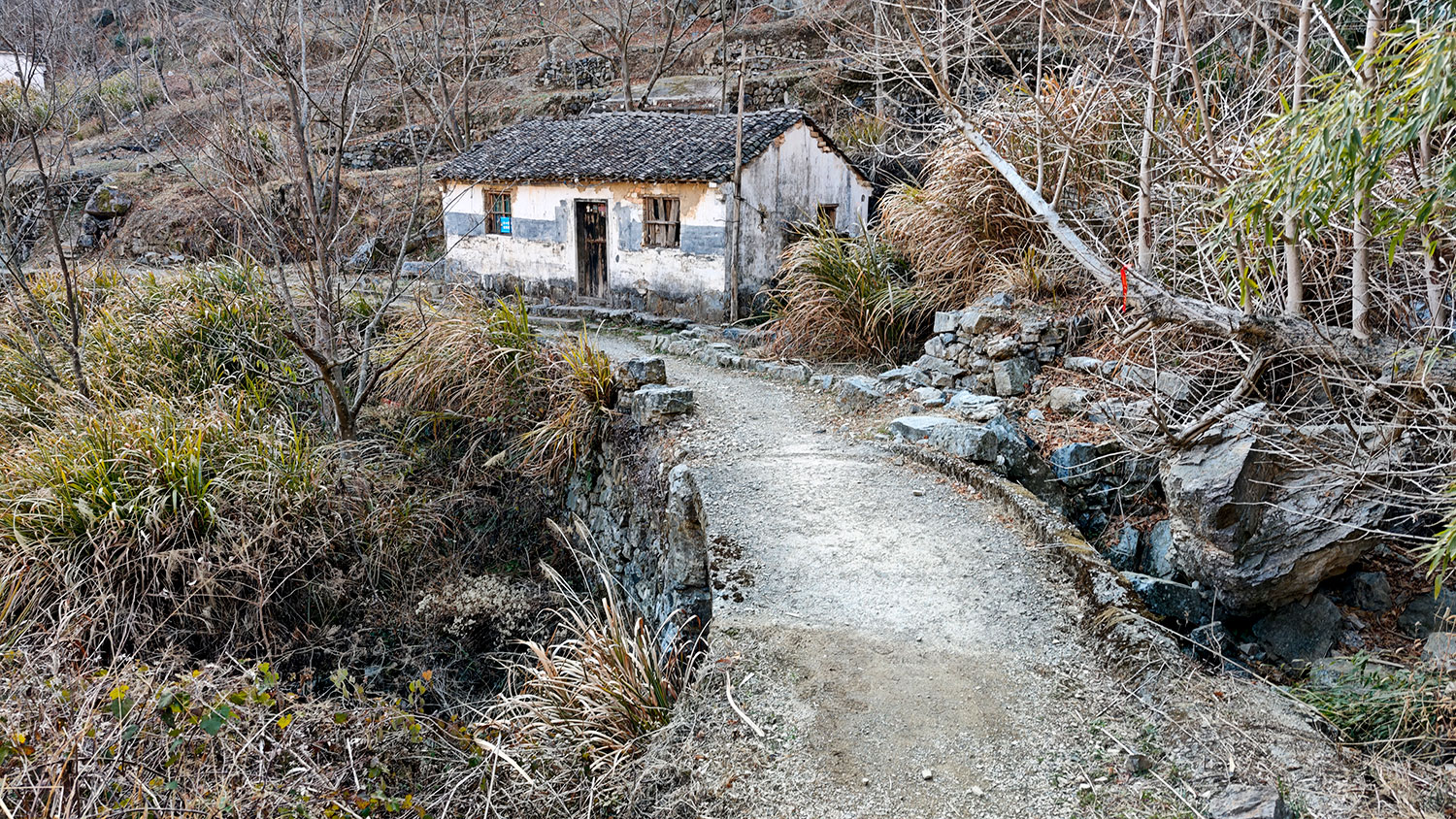
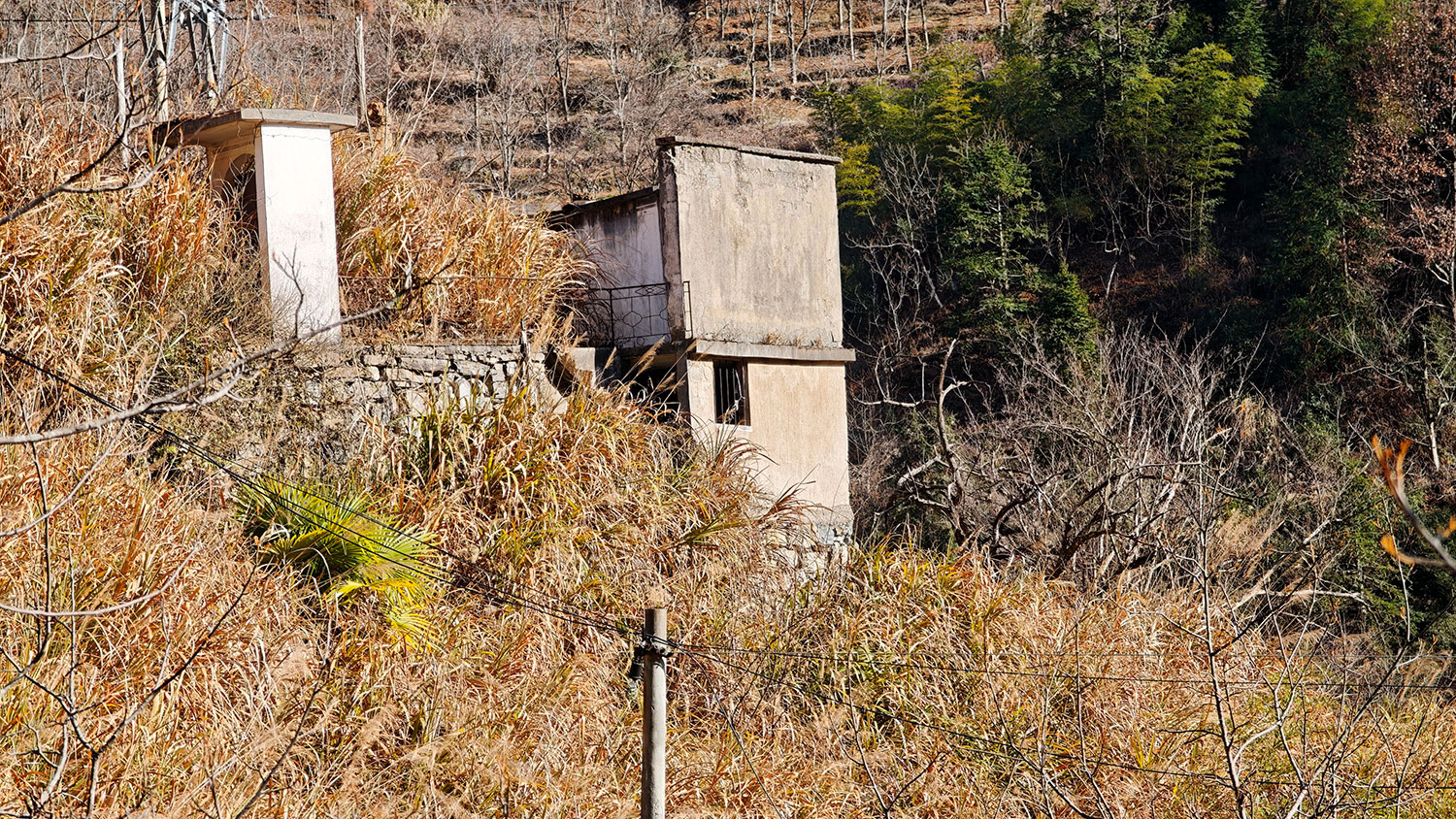
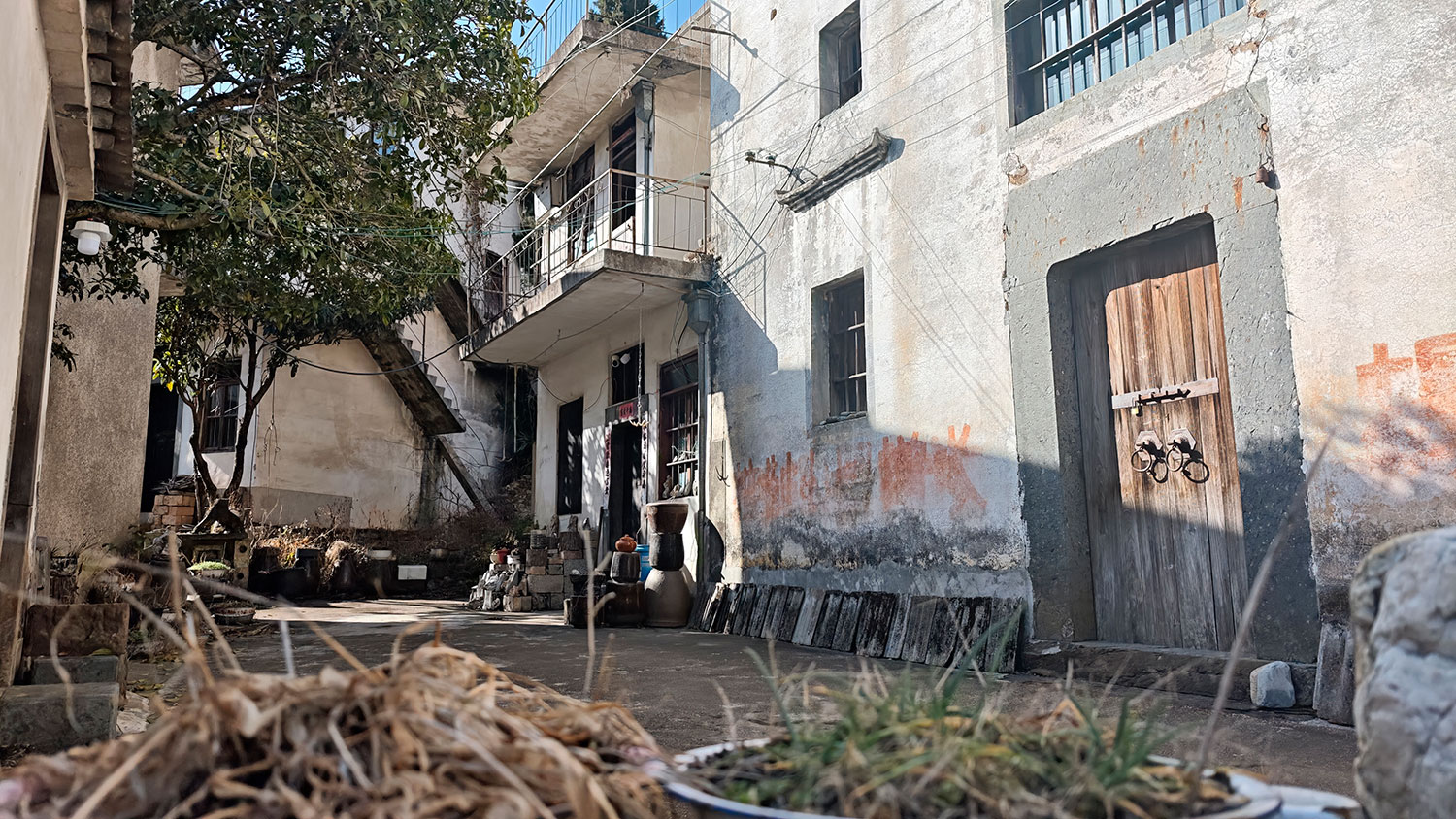
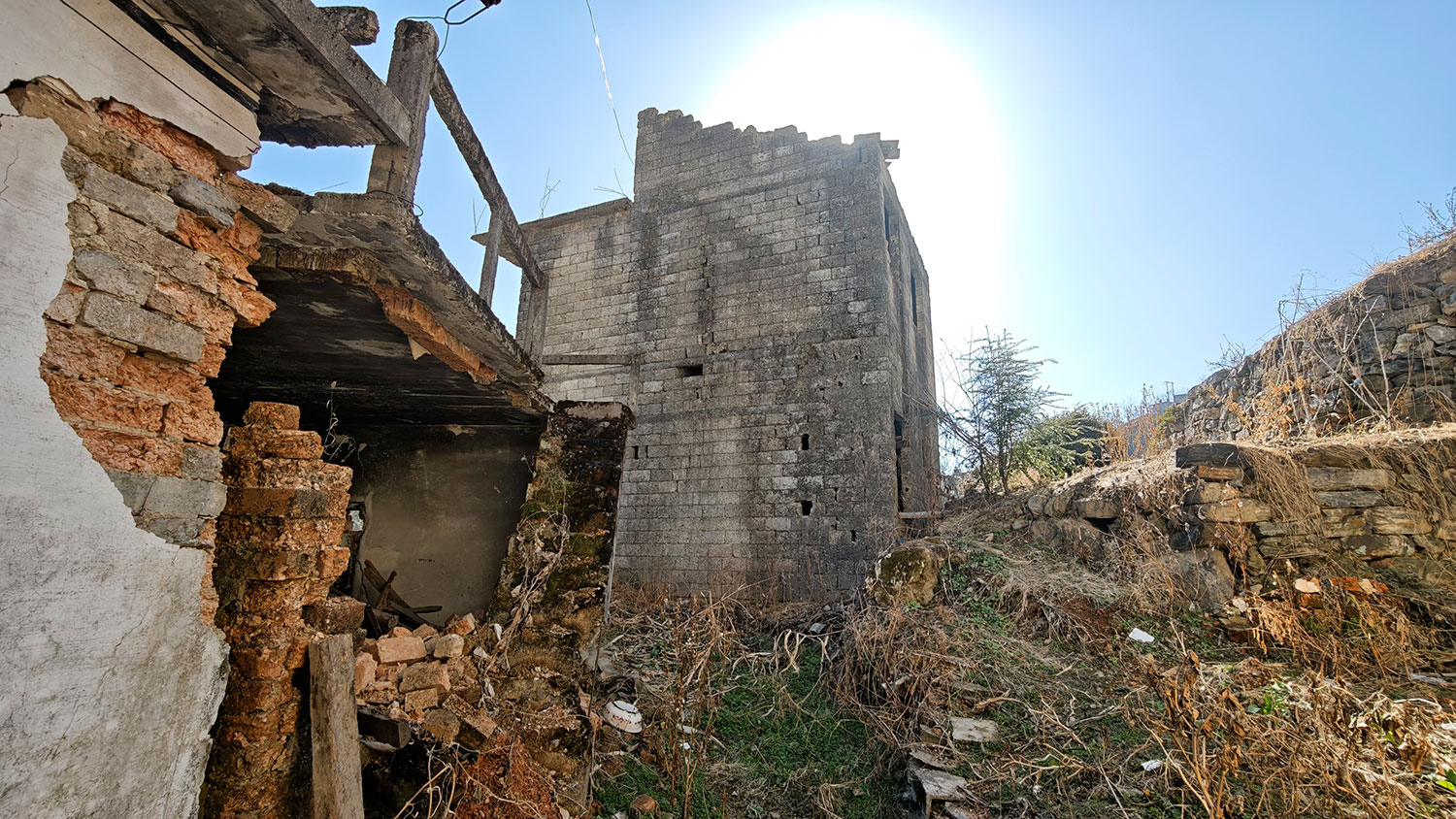
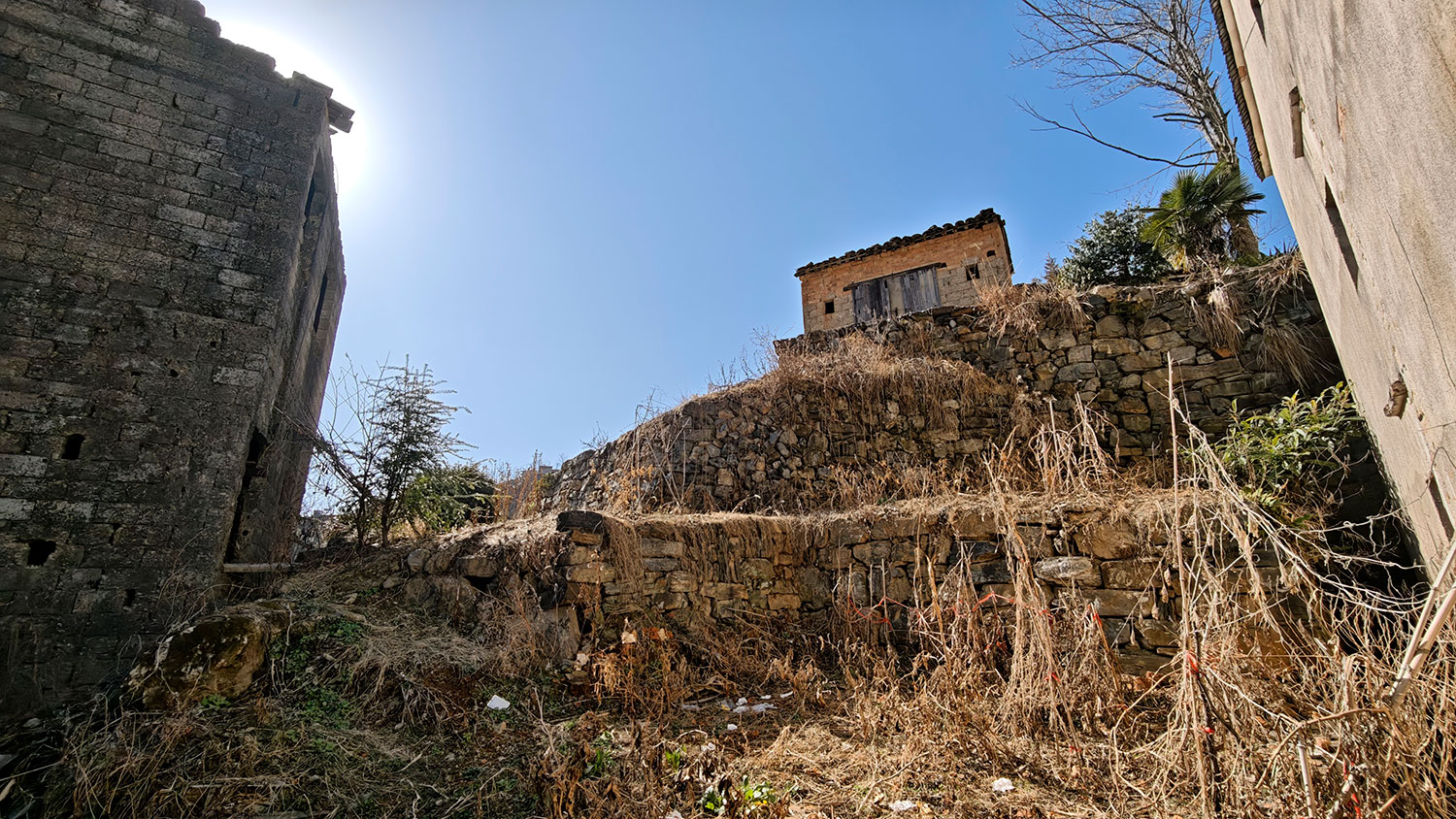
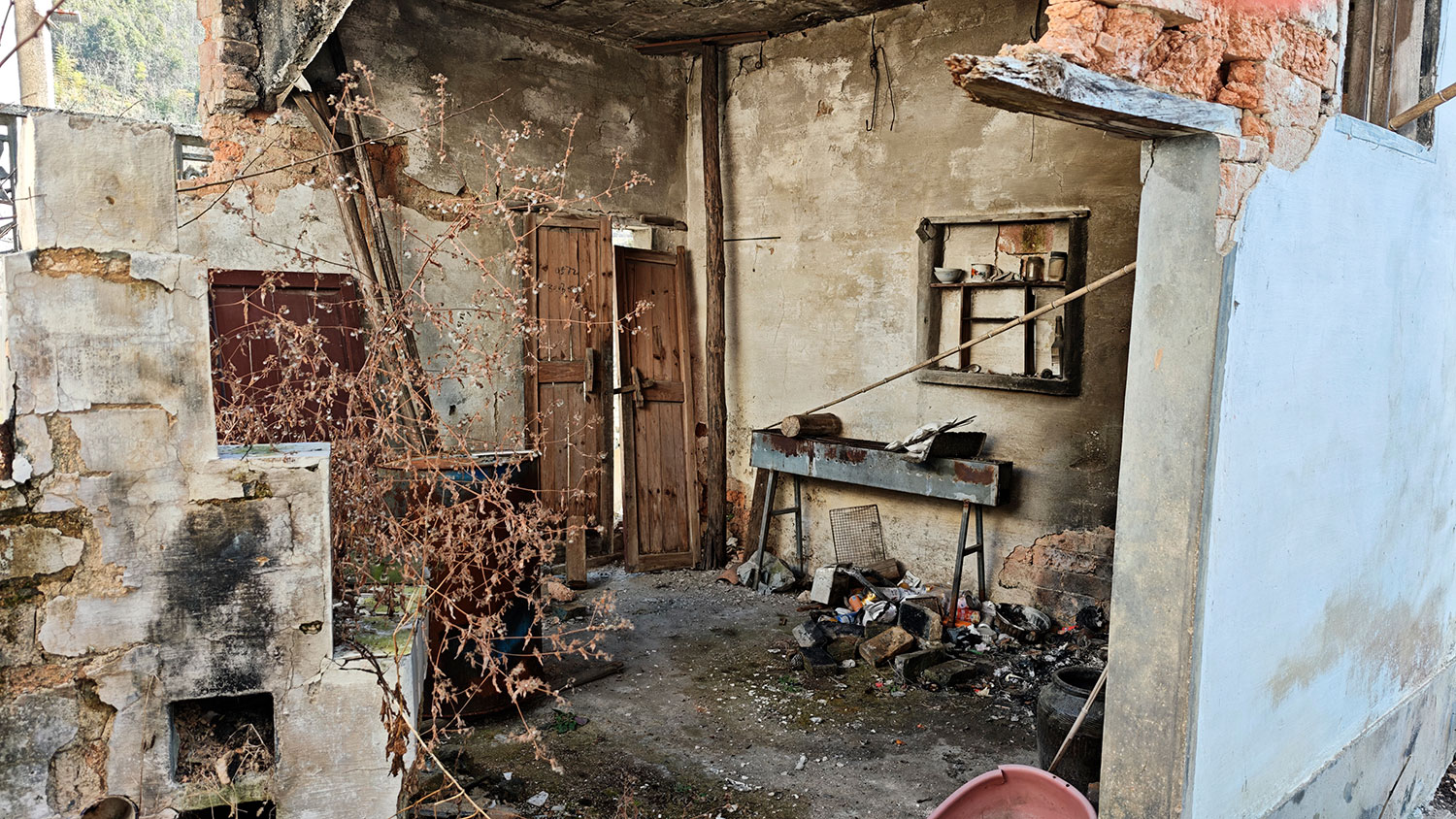
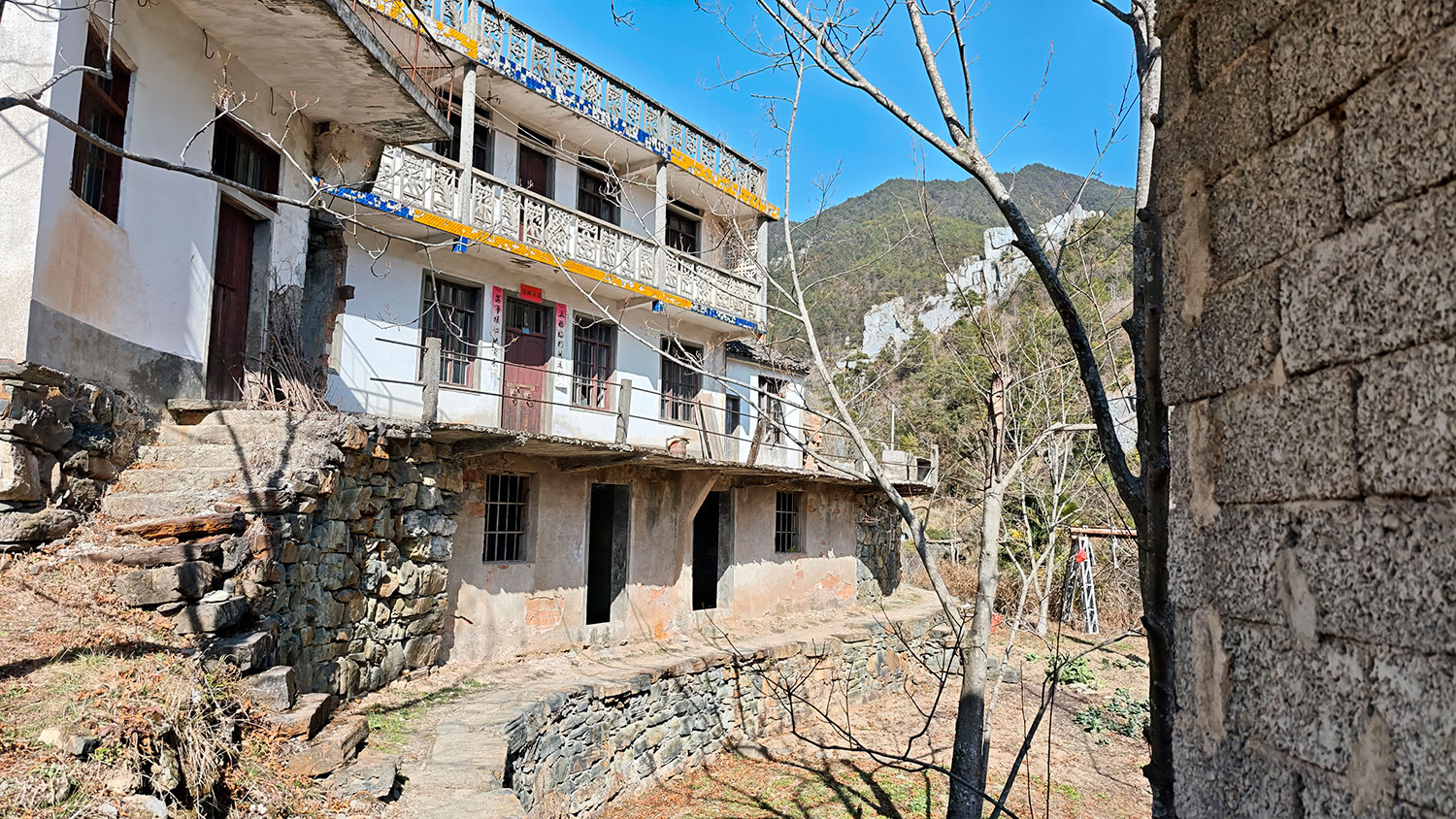
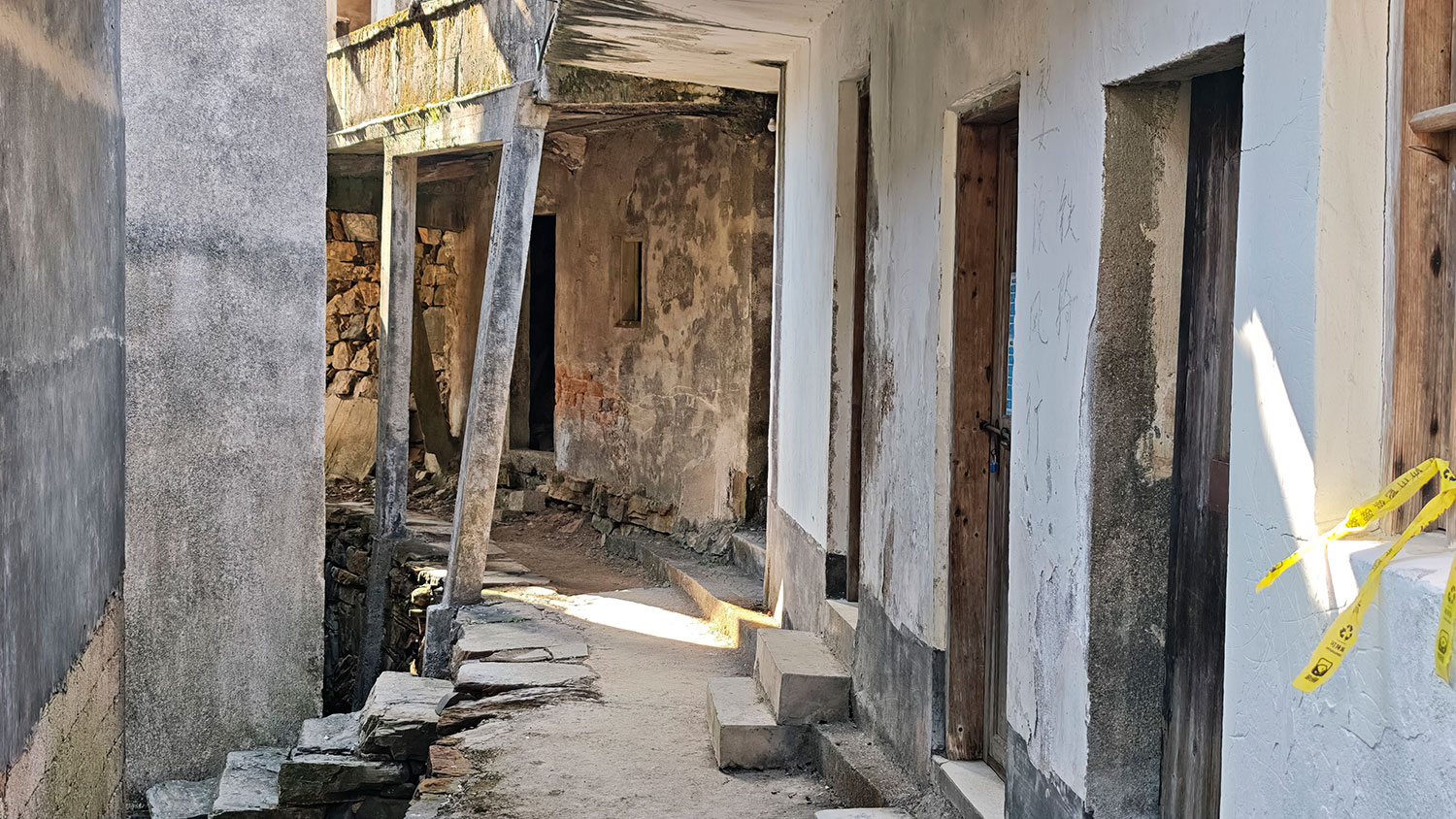
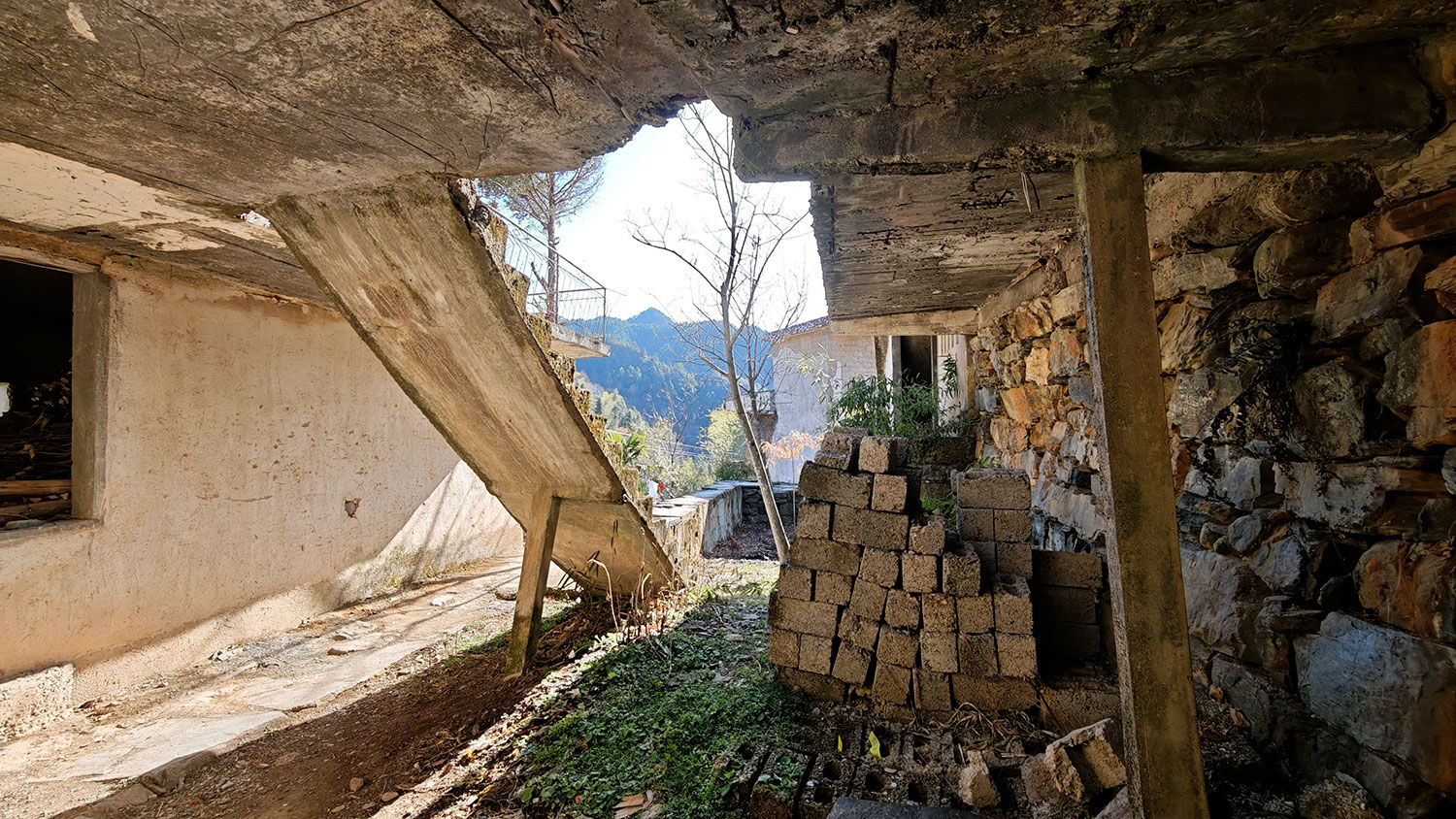
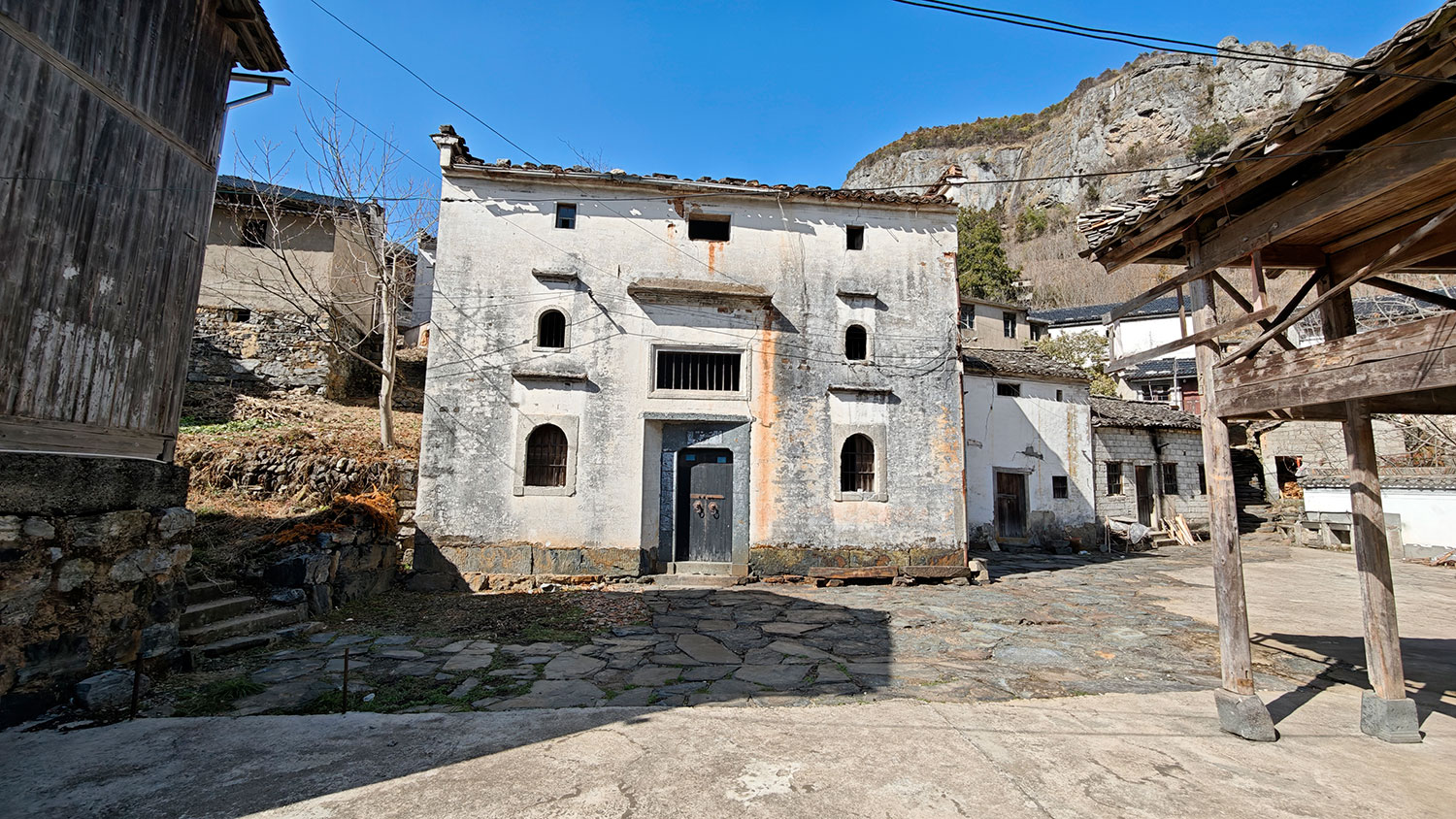
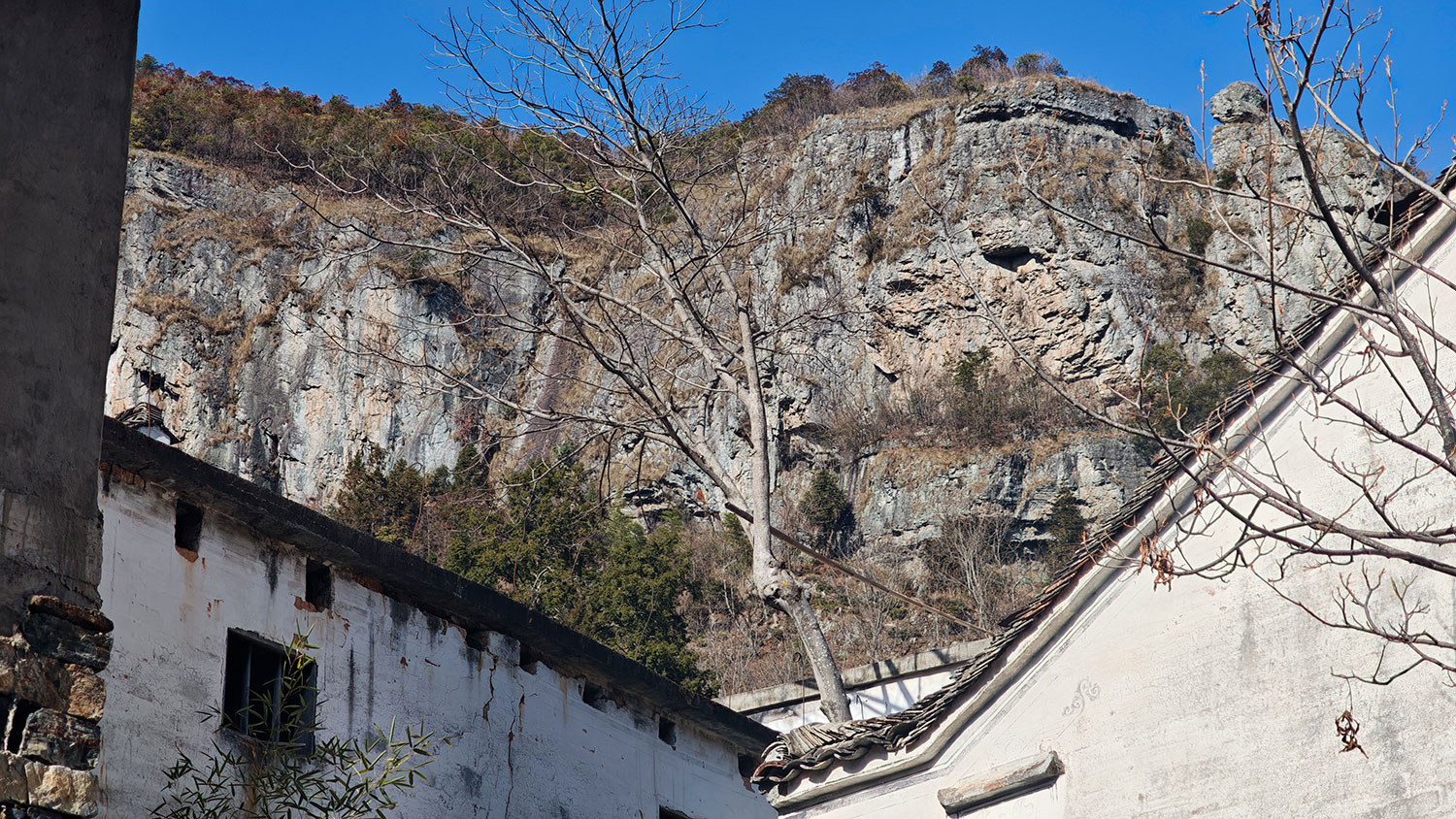
When we enter the village, what hits me the most is the silence. There’s just no sound, a rare thing in even the tiniest of villages in China. Nearly all shrubs have turned yellow, but what betrays the presence of a few people still living here are carefully planted crops. Many buildings have partially or fully collapsed, and the place is scattered with tombs, all aimed south.
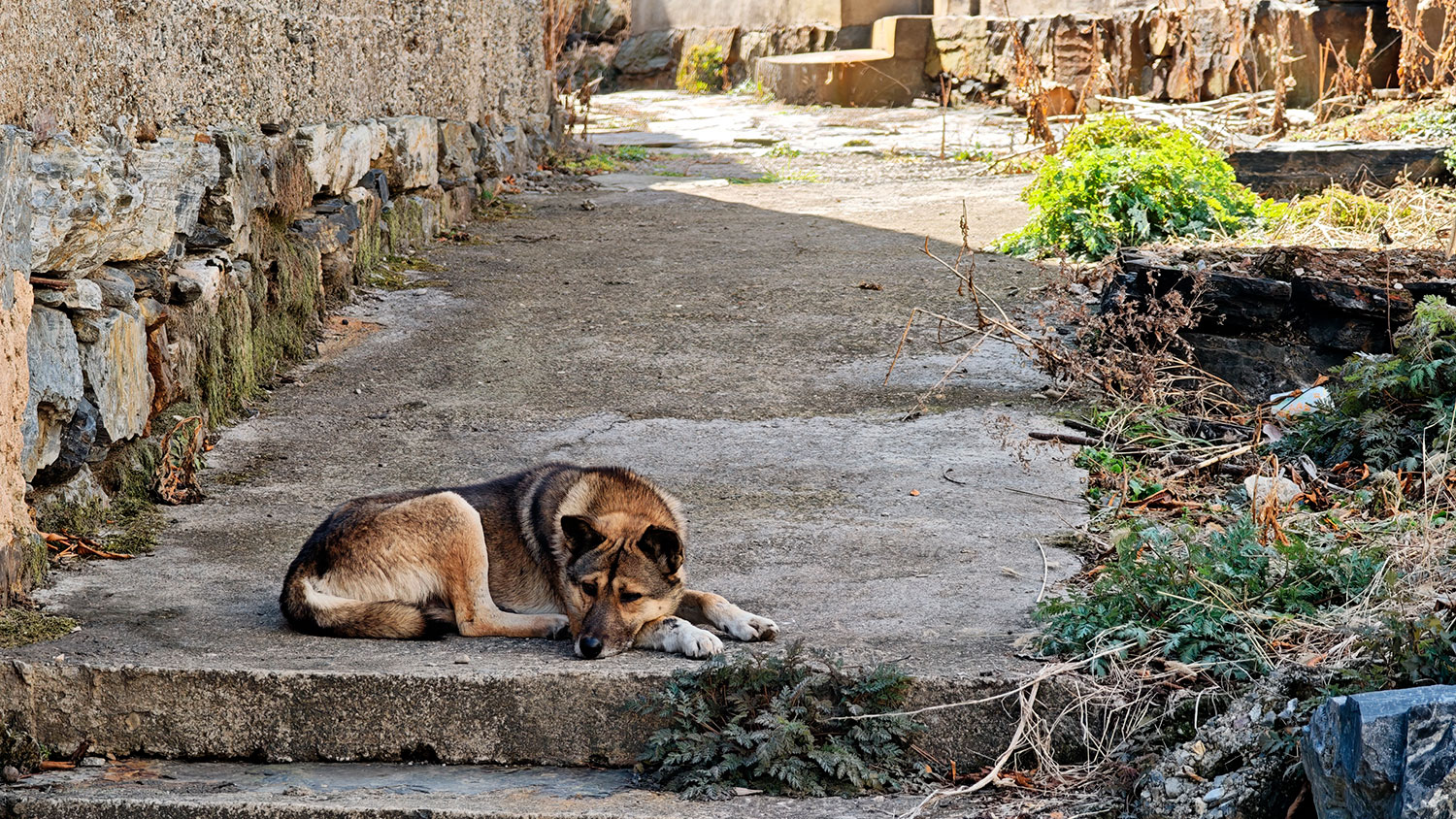
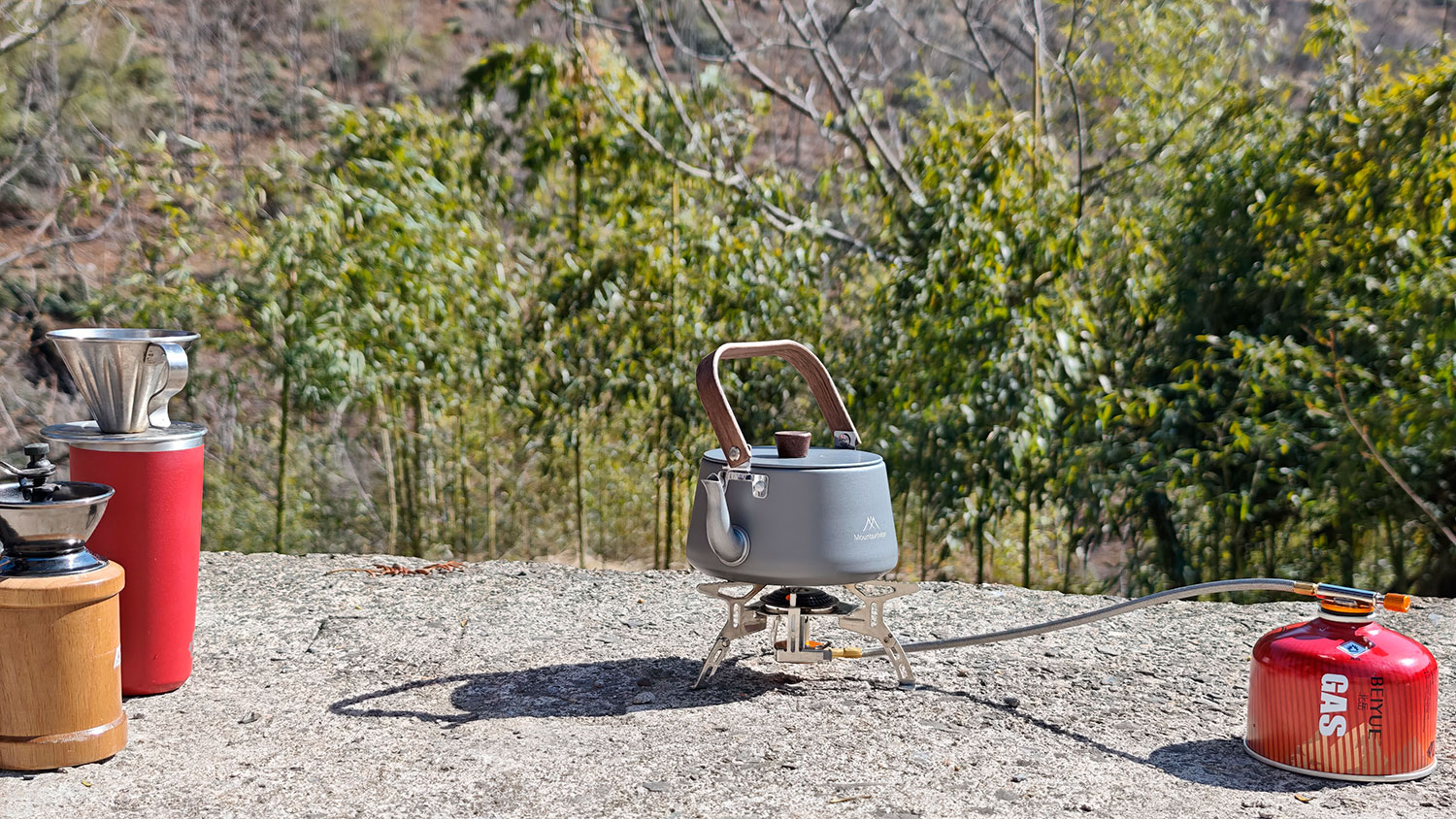
We brought a small camping stove and drop our bags in front of what we think is the city hall, to make some coffee and heat up canned tomato soup. We cool down a bit and can explore the village, but I don’t dare to go inside the houses. As the smell of tomato soup spreads from the tiny square, some dogs come to take a look, but don’t dare to get close to us.
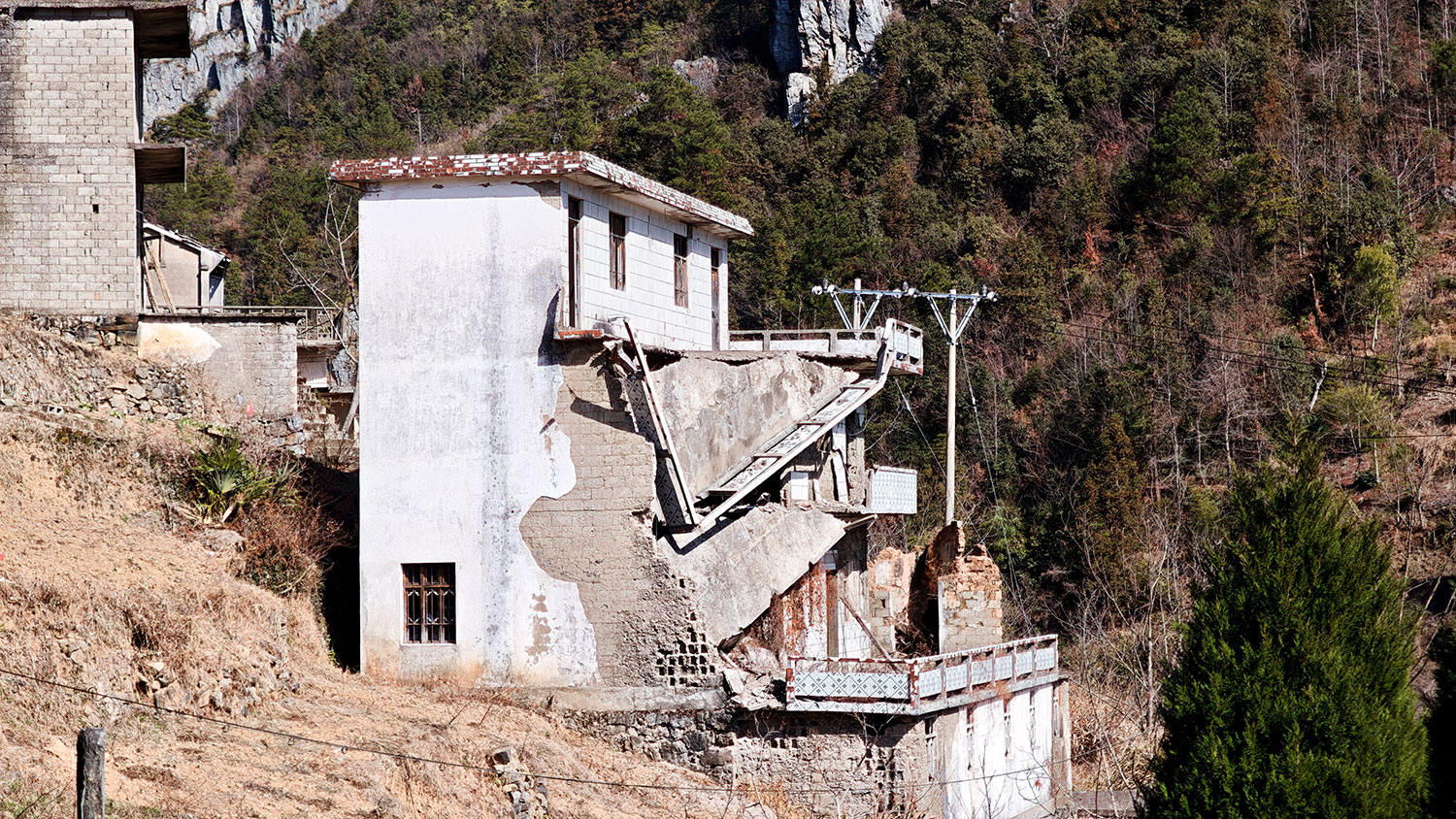
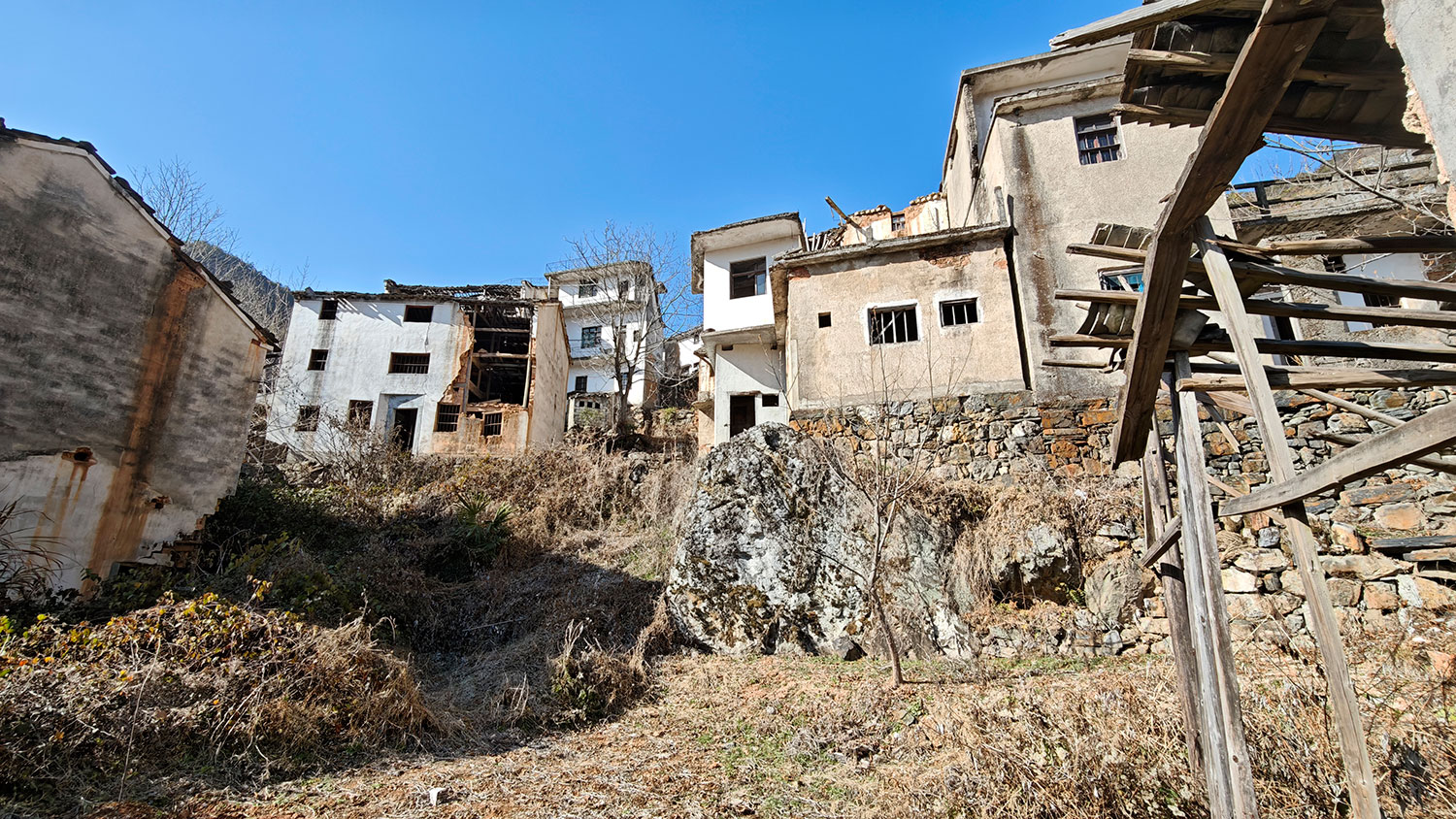
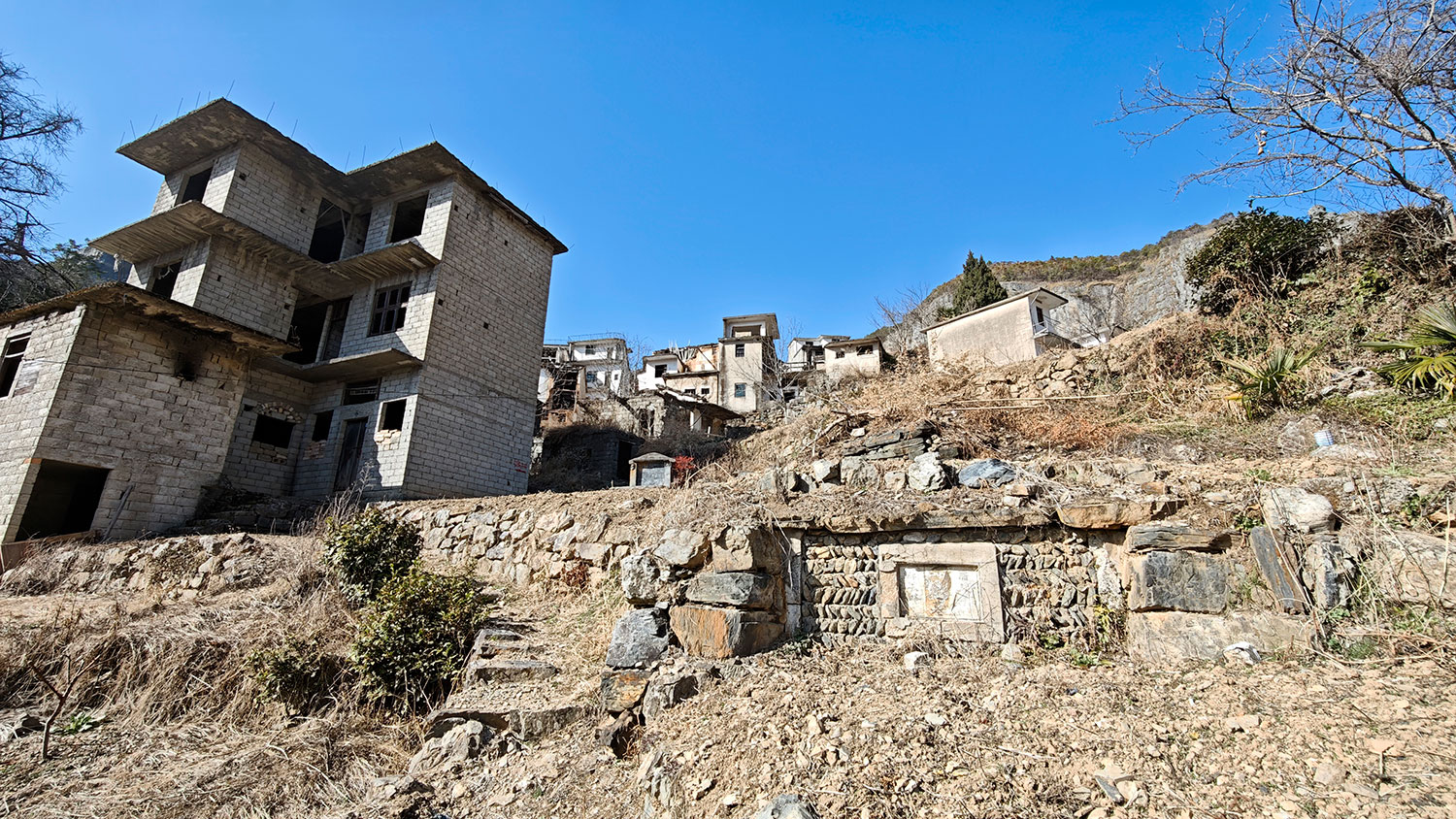
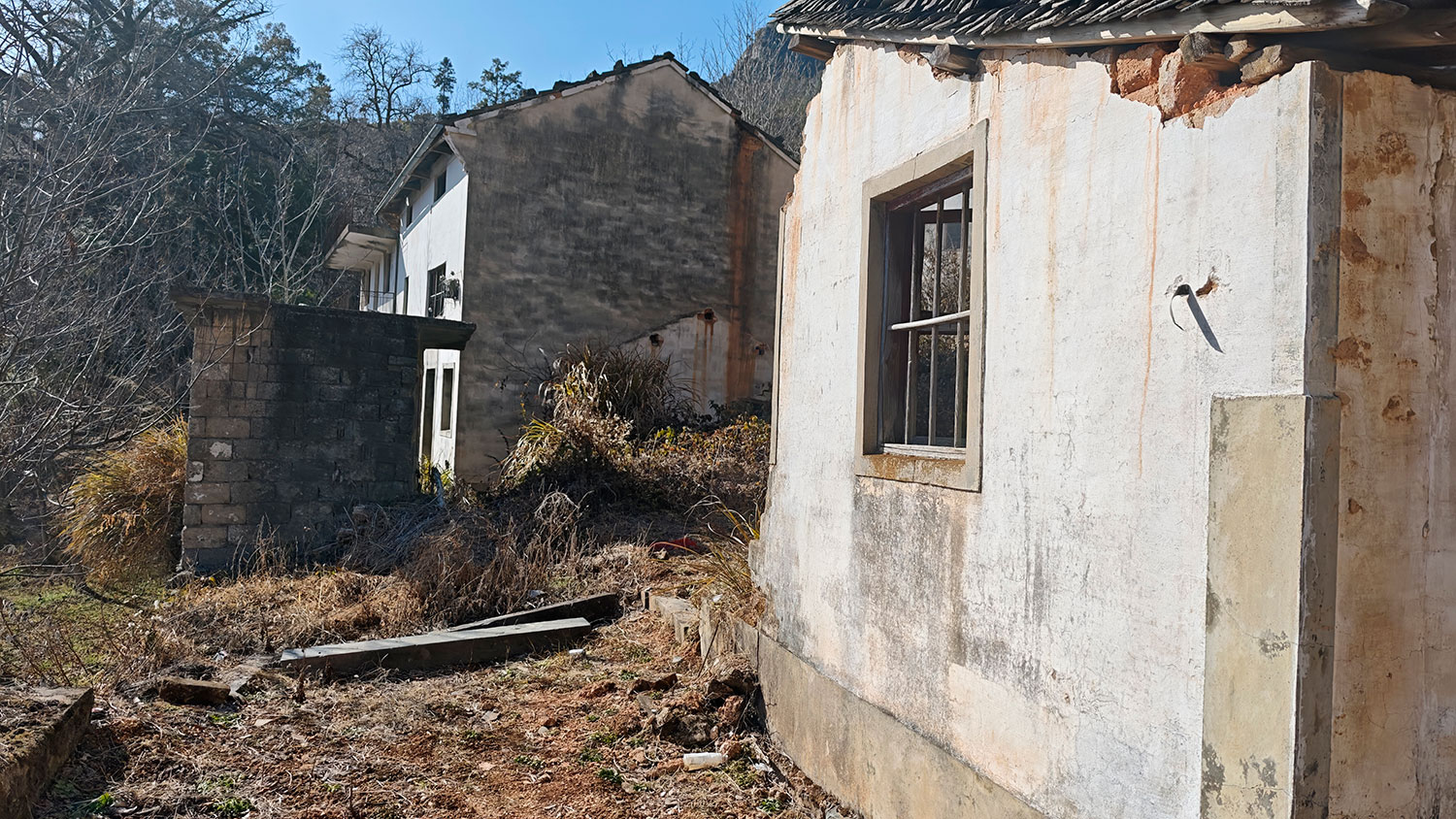
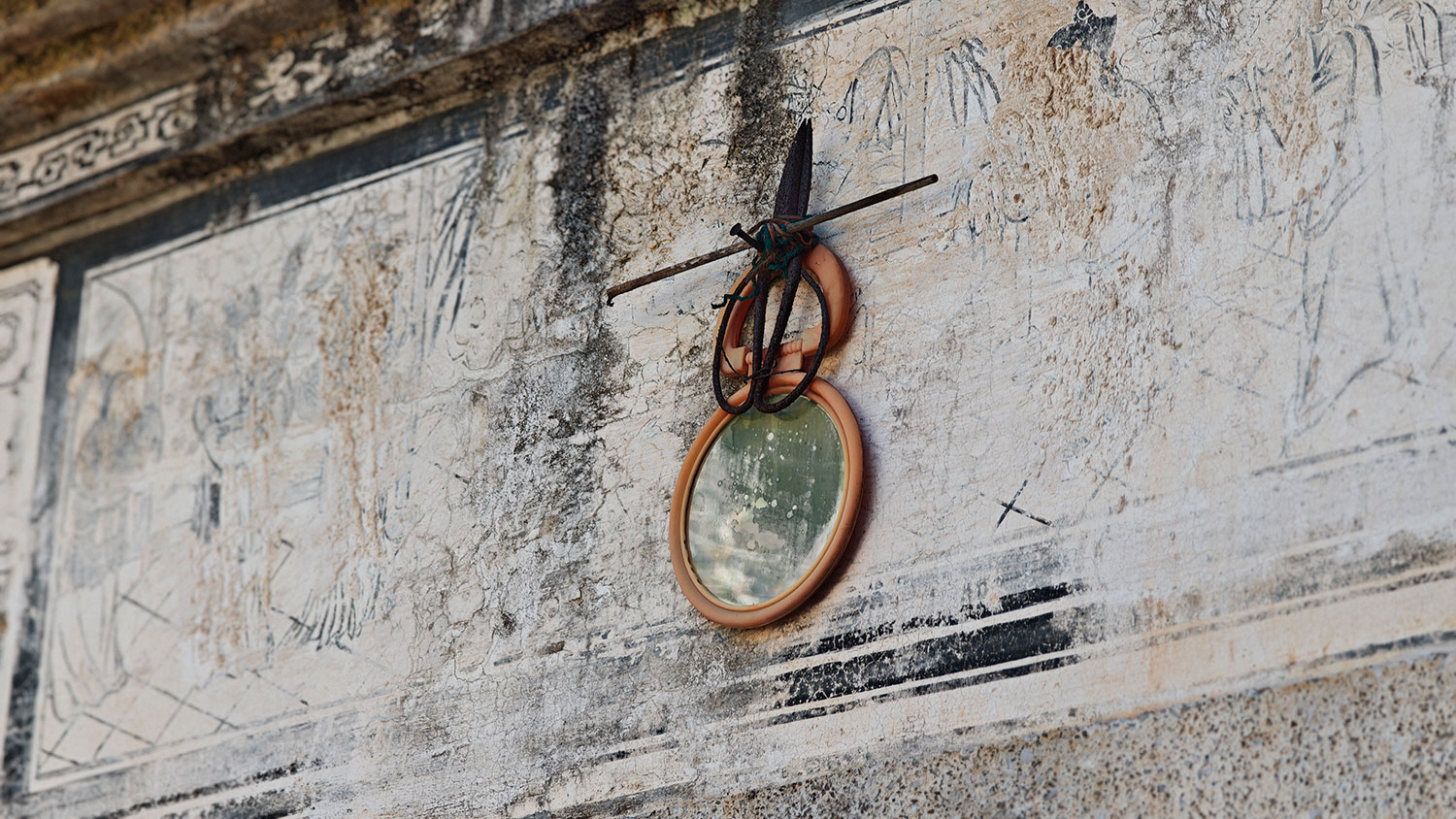
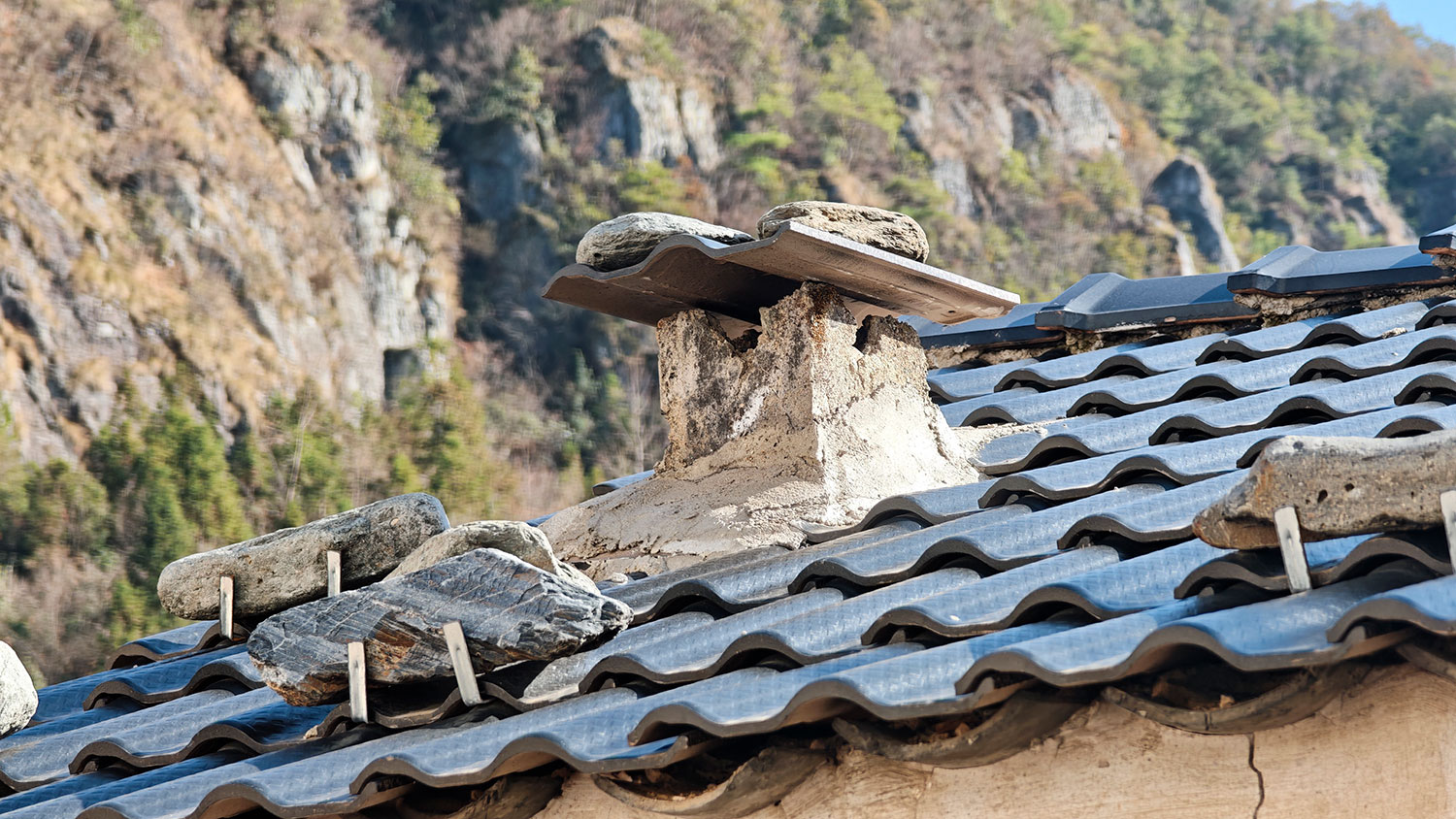
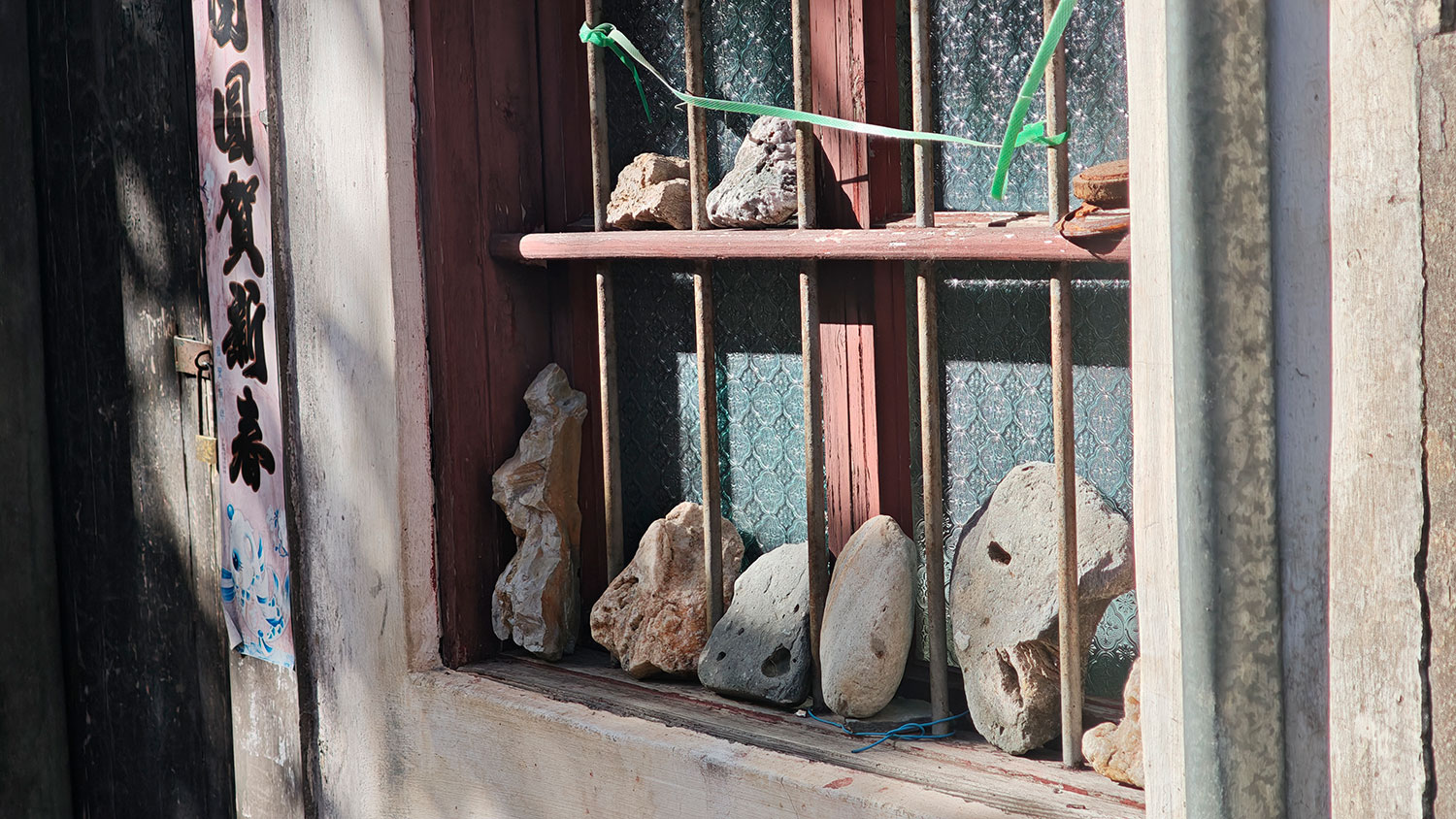
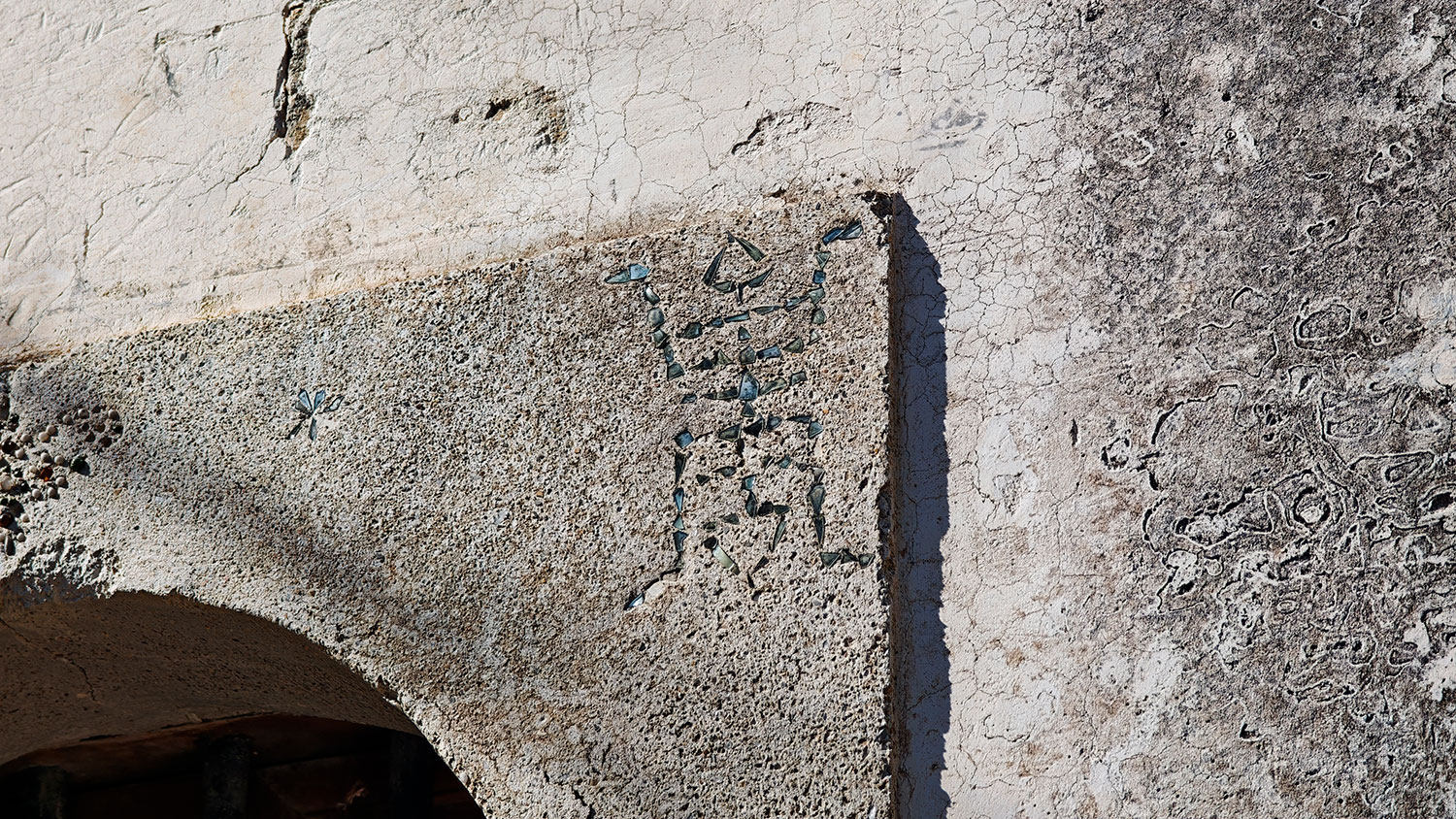
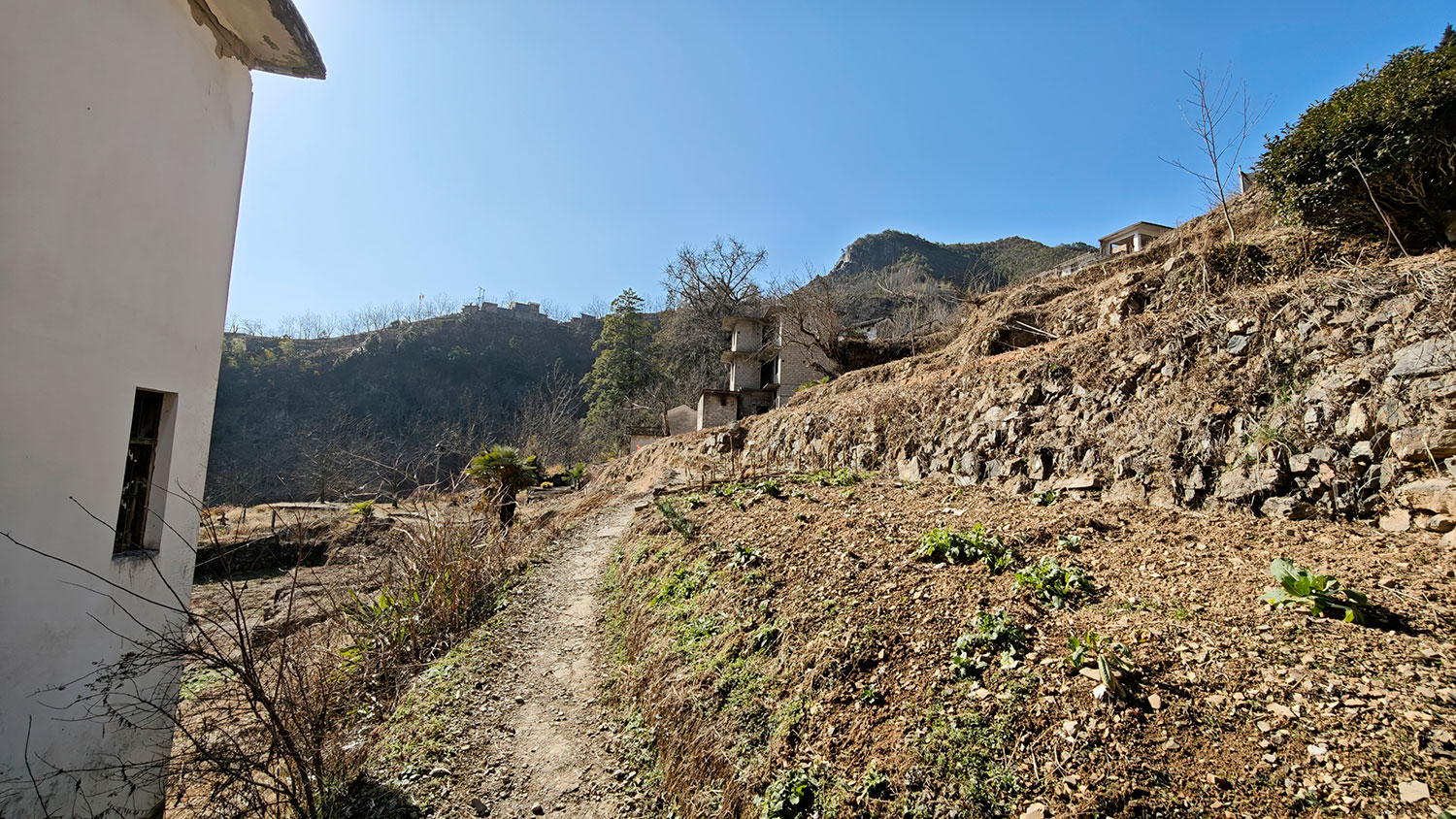
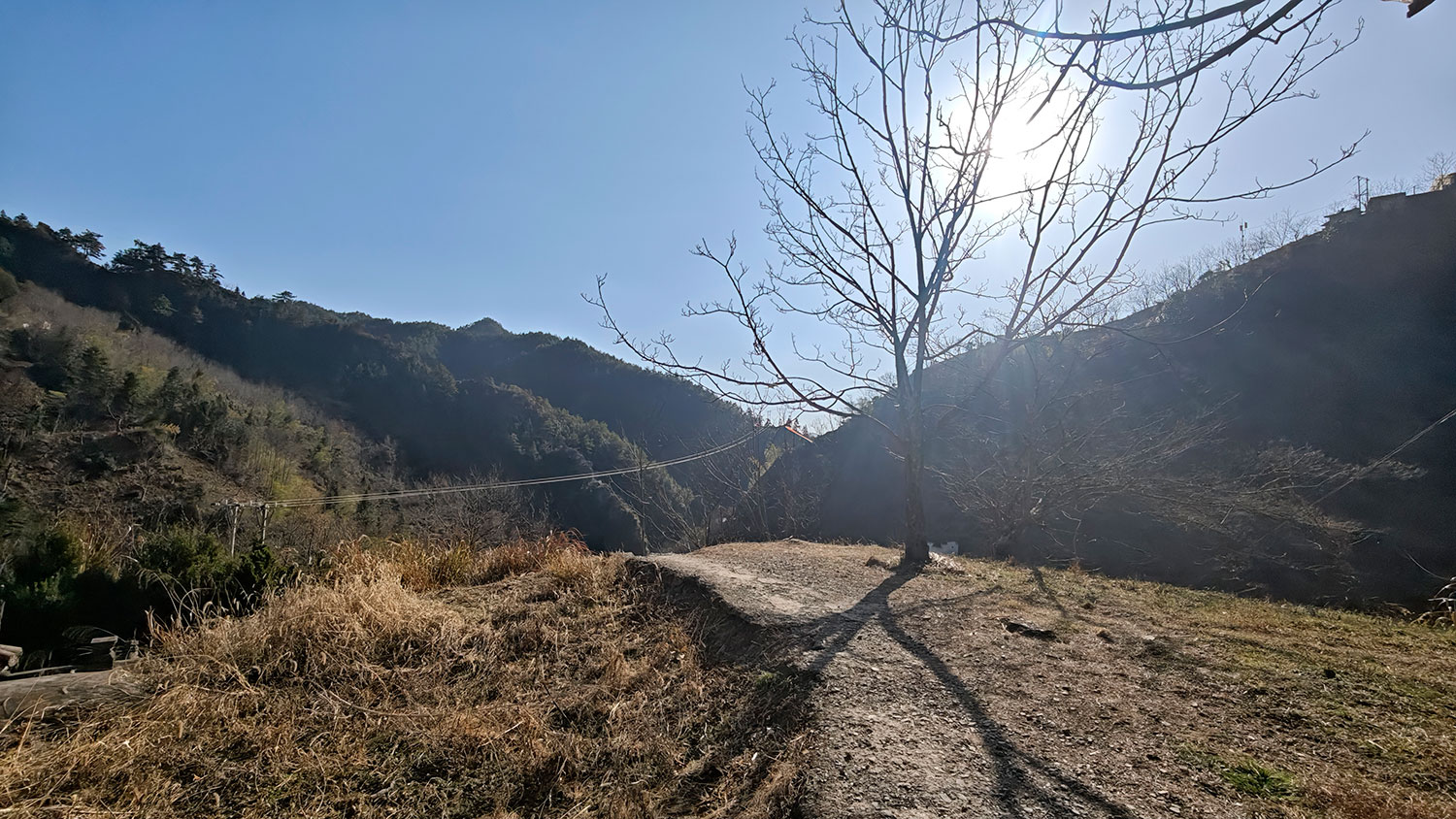
When we go back, we take the high path — and this time, rather than 90 minutes, it only takes us half the time now. This for sure is the path the donkeys use as well, visible from plenty of droppings they’ve left behind.
On the way, we meet a guy carrying two large bags – sweat on his head, but he looks unreasonably happy. I ask if he’s from around and he mentions he lives in the village, as one of the last few, “and the youngest!” he adds. He says he is very reluctant (舍不得) to leave. The village has internet, electricity, and running water; the main inconvenience is that you just have to get there on foot. “I also have a house in the city, but I love it here. I grew up here. I’m the youngest now, most people have moved away”, and the word he uses is 迁走了, meaning those people moved away and also registered their hukou elsewhere. Later I read online that most people moved 12 years ago.
We walk back, and with sore feet and backs, sweaty shirts, and drive back to Sanyang. The village reminds me of Anshan Ancient Road (安山古道), a place that soon no longer exist. That path is being flooded by the construction of a dam, while the village here is slowly being cut off from the outside world. It’s not as if I can visit all ancient roads or villages in China in my lifetime anyway, but at least there is always the possibility of visiting each of them. Yet here, the opportunity is closing. This makes being here feel so significant. I cannot stop the entropy of time, but at least we can visit, take photos, and keep a place in our hearts.